


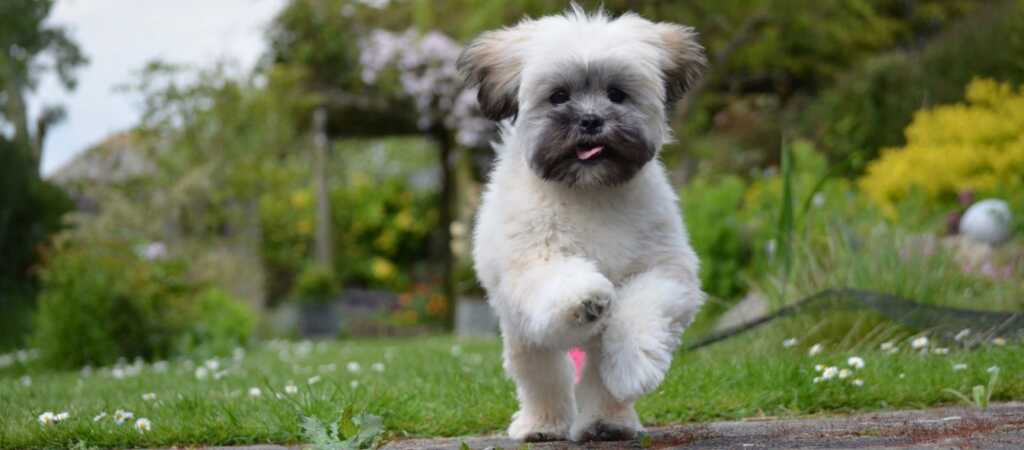
Every night, the same routine. We leave our socks by the side of the bed. Every night, Poppy steals them. One at a time, with great deliberation, she carries each sock to a hiding spot of her choosing. Then she jumps back on the bed and stares at us with an expression that can only be described as smug.

If you’ve ever watched your dog do something deliberately cheeky and thought “they know exactly what they’re doing,” you’re probably right. Whether dogs have a genuine sense of humour is a question that’s been debated for well over a century. The answer depends on what you mean by humour, and how willing you are to accept that your dog might actually be taking the piss.
What Darwin thought
Charles Darwin was one of the first scientists to suggest that dogs have a sense of humour. In The Descent of Man, published in 1872, he described a dog playing a keep-away game with a stick, squatting just out of reach of its owner and then dashing off gleefully when they got close. Darwin called it “what may fairly be called a sense of humour, as distinct from mere play.”
If you’ve ever tried to get a ball back from a Lhasa Apso, you’ll know exactly the game Darwin was describing. Poppy does this constantly. She’ll bring a toy back to within arm’s reach, wait for the exact moment you go to grab it, then bolt. Every time. And she gets better at the timing, which suggests she’s learning from the interaction and refining the joke.
What the research says
Modern animal behaviourists have moved the conversation forward from Darwin’s observations. Patricia Simonet at Sierra Nevada College recorded what she identified as a “dog laugh,” a breathy, forced exhalation that dogs make during play. When recordings of this sound were played back to other dogs, it reduced stress behaviours and increased playful interactions. It’s not a belly laugh, but it’s a sound specifically associated with fun and social bonding.
Cognitive research from the Family Dog Project in Budapest (the same group behind much of the best canine cognition research) has shown that dogs are capable of complex social thinking. They can read human emotions, anticipate human behaviour, and adjust their own actions accordingly. These are the building blocks of humour. You need to understand what someone expects in order to deliberately subvert that expectation, which is essentially what a joke is.
Whether dogs consciously intend to be funny is harder to prove. But they certainly engage in playful deception, exaggerated behaviour, and deliberate rule-breaking that looks an awful lot like humour to anyone watching.
The Lhasa Apso sense of humour
Some breeds wear their playfulness on their sleeve. Labradors, Golden Retrievers, and Boxers are the class clowns of the dog world. Lhasas are more like the dry-witted kid at the back of the room who delivers a devastating one-liner when nobody’s expecting it.
Poppy’s humour is subtle and calculated. The sock theft is a nightly performance piece. She doesn’t grab them and run in a frenzy. She does it slowly, watching to see if we’ve noticed, then accelerates the moment eye contact is made. It’s theatrical. There’s timing involved.
She also has a thing where she’ll be asked to do something, like come in from the garden, and she’ll walk to within about a metre of the door, then stop and sit down. She knows what we want. She’s choosing not to do it, and she’s doing it at the exact distance that maximises our frustration. That’s not a failure of training. That’s a toddler-level wind-up.
The independent temperament that defines Lhasas is what makes their humour so distinctive. They don’t perform for approval the way some breeds do. They do things that amuse them, and if you happen to find it funny too, that’s a bonus. Poppy has never done anything for our entertainment. She does it for hers.
Types of dog humour
If you watch dogs closely, you’ll notice several distinct types of behaviour that look remarkably like humour.
Keep-away games are the most obvious. The dog retrieves something, then refuses to give it back, drawing you into a chase. They know the rules. They’re breaking them on purpose. That’s the canine equivalent of a practical joke.
Exaggerated play bows are another. Dogs use play bows to signal “this is fun, not serious.” Some dogs overdo the bow to the point of comedy, bouncing into position with ridiculous enthusiasm. It’s a signal that’s been cranked up to 11 for effect.
Then there’s the selective obedience that Lhasas excel at. Poppy understands “sit,” “stay,” “come,” and “off.” She responds to all of them. But sometimes she’ll acknowledge the command with a look, pause as though weighing it up, and then do the exact opposite. It’s not that she doesn’t understand. She’s making a point. And the timing is always impeccable, which is what makes it feel deliberate rather than random.
Some dogs also seem to enjoy startling people. Poppy has a habit of appearing silently behind visitors. She’s small and quiet, and she positions herself right where someone is about to step backward. When they jump, she looks up at them with complete innocence. Coincidence? After the twentieth time, it’s hard to argue that.
Do dogs understand when we’re laughing?
Research suggests they do, at least in part. Dogs are highly attuned to human emotions, and laughter produces specific vocal patterns, facial expressions, and body language that dogs can read. Studies have shown that dogs respond positively to human laughter, often repeating the behaviour that caused it.
If your dog does something funny and you laugh, they learn that this action produces a positive response. Over time, they’re more likely to repeat it. This isn’t conscious comedy. It’s reinforcement learning. But the effect is the same. Your dog develops a repertoire of behaviours that make you laugh, and they deploy them strategically.
Poppy knows her sock routine gets a reaction. She knows the garden-door standoff winds us up. And she knows that following us into the bathroom and staring at us produces a reliably flustered response. Whether she finds these things funny in the way we understand humour is debatable. But she absolutely knows they have an effect, and she keeps doing them.
Playfulness isn’t the whole picture
Some breed playfulness rankings put Lhasas near the bottom, which always makes us laugh. Those rankings measure willingness to chase toys and play fetch, which is a very narrow definition of playfulness. A Lhasa’s humour is more intellectual than physical. They’re not going to sprint after a ball twenty times in a row. They’re going to steal your socks, ignore your commands with perfect comic timing, and position themselves in the exact spot where they’ll cause maximum inconvenience.
It’s a different kind of play, and it’s rooted in the breed’s intelligence and observational nature. Lhasas watch everything. They learn your routines, your habits, and your weak points. Then they exploit them. If that’s not a sense of humour, we don’t know what is.
Do dogs have a sense of humour? Based on a decade of living with Poppy, the answer is yes. It might not involve punchlines. But it involves timing, audience awareness, and a clear understanding of what gets a reaction. And honestly, her sock routine is funnier than most things on television. She’d be offended if we said otherwise. She’d also steal our socks in protest, which rather proves the point.
Important information
Information provided by LhasaLife should not be taken as professional veterinary advice or clinical advice. It is important to consult a licensed veterinarian for any health concerns or issues with your pet. The content of the article Do dogs have a sense of humour? should not be used as a substitute for veterinary care, or treatment advice for you or your pet, and any reliance on this information is solely at your own risk.
This article may contain affiliate links, meaning we may earn a small commission at no extra cost to you if you purchase through these links. Affiliate links do not necessarily imply an endorsement of the product by LhasaLife. However, we only share products we believe could be helpful to you and your beloved Lhasa Apso. Your support helps us keep the website running and full of useful content.

We would play the game knock on the end table and who is it with my German Shepherd/Doberman mix . Every now and then, he would run to the door with his “somebody’s knocking and you didn’t hear” bark and manner. Then as if he’s laughing at all of us humans, he looks at us as if we are all idiots. He plays our game back on us and loves it. I do believe dogs have a sense of humor.
We would play the game knock on the end table and who is it with my German Shepherd/Doberman mix . Every now and then, he would run to the door with his “somebody’s knocking and you didn’t hear” bark and manner. Then as if he’s laughing at all of us humans, he looks at us as if we are all idiots. He plays our game back on us and loves it. I do believe dogs have a sense of humor.