



This article contains affiliate links. If you buy through our links, we may earn a small commission at no extra cost to you. This helps us keep LhasaLife running and Poppy in treats.

Why Lhasa Apso joint care matters more than you think
Here is something most new Lhasa owners don’t realise: those short, sturdy legs that make your dog look like a furry little ottoman? They are working harder than you think. Lhasa Apsos might be small, but their compact build puts real pressure on their joints, and the problems tend to sneak up quietly.
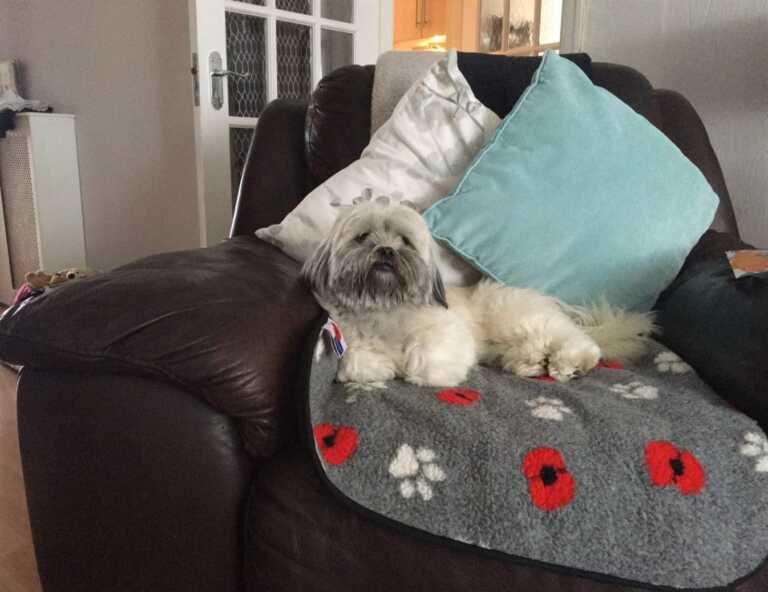
Poppy, our resident Lhasa, started doing this odd thing around age five. She would hesitate at the bottom of the stairs, just for a second, before launching herself upward. It was so subtle that we nearly missed it. That tiny pause was her joints telling her something, and it is exactly the kind of early sign that most owners overlook.
The good news? Lhasa Apso joint care is not complicated, and starting early can make a massive difference to your dog’s comfort as they age. Whether your Lhasa is a bouncy puppy or a dignified senior, this guide covers everything you need to know about keeping those legs moving happily.
Why Lhasa Apsos are prone to joint issues
Lhasa Apsos were bred in Tibetan monasteries, where they spent centuries patrolling stone floors and scrambling over uneven terrain. That history gave them a tough, low-to-the-ground body, but it also left them vulnerable to a few specific joint problems.
Patellar luxation is the big one. This is where the kneecap slides out of its normal groove, and it is one of the most common orthopaedic conditions in small breeds. You might notice your Lhasa suddenly skip a step on a walk, holding one back leg up for a stride or two before carrying on as if nothing happened. That skip is the kneecap popping out and back in again.
Hip dysplasia crops up too, though it is less talked about in small dogs than in larger breeds. The hip joint does not sit properly in its socket, causing wear over time. And then there is plain old arthritis, which can develop in any dog as they age but tends to hit Lhasas earlier than you might expect because of the extra load on those compact joints.
The breed’s long back also plays a role. Like Dachshunds and Corgis, Lhasa Apsos carry a lot of body relative to their leg length. That means more strain on the spine and the joints that connect to it.
Spotting the early warning signs
Lhasa Apsos are famously stoic dogs. They were bred as sentinel dogs, after all, and showing weakness was not part of the job description. This means they are brilliant at hiding pain, which makes catching joint problems early a bit of a detective game.
Watch for these subtle clues:
- Hesitation before jumping on or off furniture, or pausing at stairs
- Stiffness after rest, especially on cold mornings, that loosens up after a few minutes of walking
- Licking or chewing at a specific joint repeatedly
- Reluctance to play or shorter walks than usual
- A change in posture, like sitting with one leg splayed out to the side instead of tucked neatly underneath
- Irritability when touched in certain areas, particularly the hips or knees
If Poppy is anything to go by, the stair hesitation was the very first giveaway. She still bounded around the garden like a lunatic, but stairs became something she had to think about. That disconnect between “still playful” and “struggling with specific movements” is typical of early joint discomfort in this breed.
Keep the weight off (seriously, this is the biggest thing you can do)
If there is one single thing that makes the biggest difference to Lhasa Apso joint health, it is keeping your dog at a healthy weight. Every extra gram puts additional stress on already hardworking joints, and because Lhasas are small, even a few hundred grams of excess weight has a noticeable impact.
You should be able to feel your Lhasa’s ribs without pressing hard. If you have to dig through a layer of padding to find them, it is time to reassess portion sizes. Their thick double coat makes it easy to miss weight gain, so get into the habit of running your hands along their sides regularly.
Feeding a high-quality diet with the right balance of protein and healthy fats helps too. If you are not sure where to start with nutrition, our guide to the best dog food for Lhasa Apsos breaks down what to look for.
Exercise: finding the sweet spot
Lhasa Apsos do not need marathon walks, but they do need regular, moderate exercise to keep their joints mobile and their muscles strong. The trick is finding the balance between enough movement and too much impact.
Two 20 to 30 minute walks a day works well for most adult Lhasas. On those walks, let your dog set the pace. If they start slowing down or sitting, that is them telling you they have had enough. Dragging a reluctant Lhasa along the pavement does nobody any favours.
Swimming is absolutely brilliant for joint health if your Lhasa will tolerate water (and many of them would rather eat a lemon than get wet). It builds muscle without any impact on the joints. Hydrotherapy is worth looking into for dogs already showing signs of stiffness.
What to avoid: repetitive high-impact activities like constantly jumping on and off high furniture or playing fetch on hard surfaces. A set of pet stairs next to the sofa can make a real difference for a Lhasa with dodgy knees.
Joint supplements: do they actually work?
The short answer is yes, for many dogs they genuinely help. The long answer involves a bit of nuance.
Glucosamine and chondroitin are the two big names in joint supplements. Glucosamine helps rebuild cartilage, while chondroitin helps it retain water and stay springy. Think of them as the maintenance crew for the cushioning between your dog’s bones. Research on their effectiveness in dogs is promising, with multiple veterinary studies showing reduced lameness and improved mobility in dogs with osteoarthritis.
Omega-3 fatty acids (particularly EPA and DHA from fish oil) have strong anti-inflammatory properties. They will not rebuild damaged cartilage, but they can reduce the inflammation that causes pain and stiffness. Many vets recommend them alongside glucosamine for a combined approach.
Green-lipped mussel extract is another ingredient worth knowing about. It contains a unique combination of omega-3s and glycosaminoglycans that some studies suggest works better for joint inflammation than standard fish oil alone.
One of the most popular and well-regarded joint supplements in the UK is YuMOVE Joint Care, which combines glucosamine, green-lipped mussel, and hyaluronic acid. It is the UK’s number one veterinary joint supplement, and you can pick it up at a decent price through VioVet. We have used it with Poppy and noticed a genuine difference in her willingness to tackle the stairs again after about six weeks.
A word of caution: supplements are not a magic fix. They work best as part of a broader approach that includes weight management, appropriate exercise, and veterinary oversight. If your Lhasa is already in significant pain, supplements alone will not cut it. Talk to your vet about a proper treatment plan.
Simple home adjustments that make a real difference
You do not need to spend a fortune to make your home more joint-friendly for your Lhasa. A few small changes can take significant pressure off ageing joints.
Orthopaedic dog beds with memory foam support are a worthwhile investment. Lhasas love their sleep (Poppy clocks about 14 hours a day and considers it a personal achievement), and a supportive bed means less stiffness when they wake up. Look for one with a low entry point so they do not have to clamber over a high bolster.
Non-slip mats or rugs on hard floors give your dog better grip. Slippery laminate or tile forces dogs to tense their muscles and brace their joints with every step. A few strategically placed rugs in high-traffic areas can make a big difference, especially in the hallway and kitchen.
Pet ramps or stairs for furniture and cars remove the need for jumping. This is a game-changer for Lhasas with patellar luxation. Why risk the kneecap popping out every time they leap off the sofa when a simple set of steps sorts it?
Raised food and water bowls reduce the strain on your dog’s neck, shoulders, and front legs during mealtimes. It is a small thing, but over hundreds of meals it adds up.
When to see the vet
Not every limp needs a vet trip, but some signs should not be ignored. Book an appointment if you notice:
- Persistent limping that lasts more than a day or two
- Sudden inability or refusal to bear weight on a leg
- Swelling around a joint
- Yelping or crying when a specific area is touched
- Progressive stiffness that is getting worse rather than staying the same
Your vet can assess the severity of any joint issues and recommend treatment ranging from anti-inflammatory medication to physiotherapy. In severe cases of patellar luxation, surgery might be discussed, though many Lhasas with mild cases manage perfectly well with conservative treatment and lifestyle adjustments.
Looking after their joints for the long haul
Lhasa Apsos regularly live to 14, 15, even 17 years old. That is a lot of years of walking, playing, and doing the zoomies around the living room. The choices you make now about your Lhasa’s joint care directly affect how comfortable and mobile they will be in those later years.
Start with weight management and regular gentle exercise. Add a quality joint supplement when your dog hits middle age (around five or six for a Lhasa). Make a few simple changes around the house. And keep an eye out for those subtle early signs that something is not quite right.
Poppy is living proof that a proactive approach works. At eight years old, she is back to taking the stairs without a second thought, still insists on supervising every delivery driver from the window, and has absolutely no intention of slowing down any time soon. Your Lhasa can do the same.
Got questions about your Lhasa’s joints or mobility? Drop us a comment below or find us on our other guides for more breed-specific advice.
Important information
Information provided by LhasaLife should not be taken as professional veterinary advice or clinical advice. It is important to consult a licensed veterinarian for any health concerns or issues with your pet. The content of the article Lhasa Apso joint care: keeping your dog comfortable and mobile should not be used as a substitute for veterinary care, or treatment advice for you or your pet, and any reliance on this information is solely at your own risk.
This article may contain affiliate links, meaning we may earn a small commission at no extra cost to you if you purchase through these links. Affiliate links do not necessarily imply an endorsement of the product by LhasaLife. However, we only share products we believe could be helpful to you and your beloved Lhasa Apso. Your support helps us keep the website running and full of useful content.




Comments