

The dog park is a complicated place. If you think it’s just a field where dogs run about and chase tennis balls, you’ve clearly never observed it through the eyes of a Lhasa Apso. What you’re looking at is a fully functioning society with its own class system, political alliances, and ongoing territorial disputes.

I’ve been studying this society for a decade. Here are my findings.
The regulars
Every dog park has its cast of characters, and ours is no different. Let me introduce you to the key players.
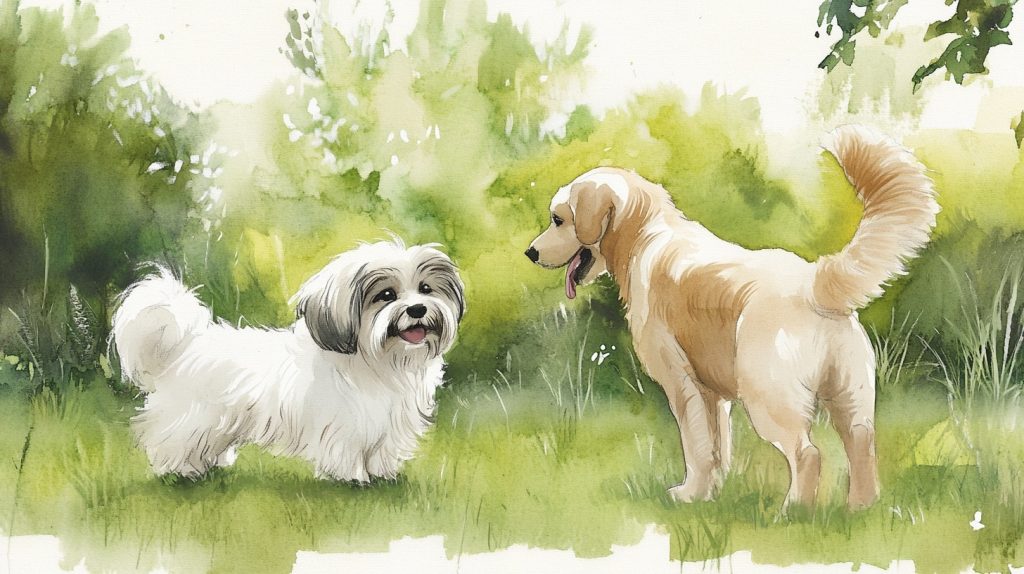
First, there’s Henry. Henry is a Golden Retriever with the intellectual capacity of a dishcloth and the energy of a child who’s been given too many sweets. He greets every dog, every human, and occasionally every tree with the same frantic enthusiasm. He has no concept of personal space. He’ll bound over to you with his tongue hanging out and his entire back end wagging, and before you can register what’s happening, he’s shoved his nose somewhere deeply inappropriate.
I do not care for Henry.
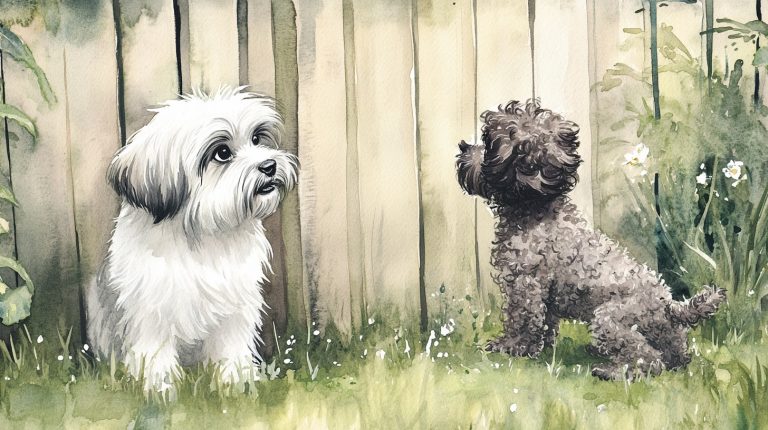
Then there’s Bella, a Cockapoo who seems nice on the surface but who, I have noticed, systematically steals tennis balls from other dogs and hoards them under the bench near the gate. She’s built a collection of roughly fifteen stolen balls over the past year. Nobody talks about it. I see it.
There’s Dave. Dave is a Bulldog. Dave does not run, fetch, or socialise. Dave sits by his owner’s feet, breathing heavily, and watches the rest of us with an expression that suggests he’s seen things. I respect Dave.
There’s a coalition of small terriers who move as a pack and seem to communicate through a series of high-pitched yaps that only they understand. I suspect they’re up to something, but I haven’t cracked the code yet.
And then there’s me. Arriving at the park like royalty on a walkabout. Lead on until I’ve surveyed the situation. A careful sniff of the air. A measured assessment of who’s here, who’s new, and whether Henry has spotted me yet.
The greeting ritual
The way dogs greet each other at the park follows a very specific protocol, and most dogs get it completely wrong.
The correct approach is this: slow walk, neutral body language, brief sniff, mutual acknowledgement, and then either a polite decision to interact further or a dignified parting of ways. It’s civilised. It’s respectful. It’s how Lhasa Apsos have been doing it for centuries.
What actually happens is that Henry sees me from forty metres away, lets out a bark that sounds like a car alarm, and sprints towards me at full speed with his ears flapping like he’s trying to achieve liftoff.
I stand my ground. Not because I’m brave (though I am), but because running would be undignified, and also because he’d catch me anyway. He’s got legs like a giraffe.
He arrives. He does the full-body sniff. I tolerate it for approximately three seconds before delivering a crisp, short growl that translates roughly as “that’s quite enough of that.”
Henry’s owner shouts “HENRY, LEAVE IT” from across the park, which Henry ignores completely because Henry has never listened to a command in his life. Dad steps in, gently redirecting Henry with a firm hand, and I use the distraction to put some distance between myself and the walking chaos factory.
My approach to park politics
I don’t play fetch. I want to be upfront about that. Fetch is a game designed for dogs who enjoy doing what they’re told, and I am philosophically opposed to doing what I’m told.
Dad throws the ball. I watch it sail through the air. I watch it land. I look at Dad. Dad looks at me. There’s a moment of mutual understanding where we both acknowledge that I’m not going to get it and he’s going to have to walk over there himself.
He’s tried everything over the years. Different balls. Different throwing techniques. A squeaky toy shaped like a chicken. Once, a piece of actual chicken, which I did retrieve, but only because it was chicken and fetching food is not the same as fetching a ball. Food retrieval is survival instinct. Ball retrieval is unpaid labour.
What I do at the park is patrol. I walk the perimeter at a measured pace, checking the fence line, noting any new smells, and keeping an eye on the general situation. If a new dog arrives, I position myself nearby and conduct a visual assessment. If they seem reasonable, I may approach for a sniff. If they seem chaotic (see: Henry), I maintain a strategic distance.
Some people mistake this for aloofness. It’s not aloofness. It’s quality control.
The small dog section
Our park has a separate area for small dogs. A thoughtful idea in theory. In practice, it’s a cage full of small dogs with big opinions, all barking at each other about whose bit of grass is whose.
Dad tried it once. He took me through the gate, unclipped my lead, and stood back expectantly, as if I was going to suddenly transform into a social butterfly and start playing chase with a Chihuahua called Mr Pickles.
I walked to the corner, sat down, and watched.
A Pomeranian tried to engage me in some sort of running game. I declined. A Dachshund sniffed my face. I allowed it briefly because Dachshunds have a quiet dignity that I appreciate. Mr Pickles yapped at me from across the enclosure. I ignored him because some interactions are beneath response.
After ten minutes, Dad said “shall we go back to the big park?” and I walked to the gate.
I don’t need a special section. I don’t need to be segregated with the small dogs. I am small in stature, yes. But I am vast in presence. The big park is where I belong, navigating the full complexity of canine society with the poise and watchfulness that my breed is known for.
The real reason I go
Here’s what I won’t tell Dad, because it would ruin my carefully cultivated image of indifference.
I love the park.
Not the fetching. Not the socialising. Not the bit where Henry shoves his nose in my ear. I love the smells. The grass after rain. The fox trails that weave through the undergrowth. The patch near the oak tree where something fascinating died approximately three weeks ago and still has the most incredible scent if you press your nose right into the mud.
I love the walking. Side by side with Dad, his pace matching mine, the lead loose between us. The way the wind picks up my coat and makes me feel like I’m in a shampoo advert.
I love the bit at the end, when we’re walking back to the car and Dad reaches into his pocket for the treat he thinks I don’t know about but which I have been aware of since we left the house.
The park isn’t about playing. Not for me. It’s about being out in the world, taking it all in, and reminding everyone who sees me that there is nothing quite like a Lhasa Apso on a good walk.
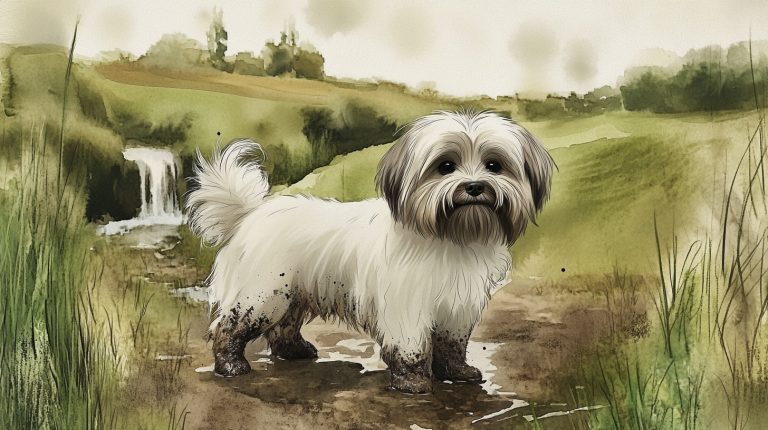
Even if Henry’s ruined the mood by trampling through a puddle and spraying everyone within a five-metre radius.
What’s your Lhasa’s park personality? The socialite? The patroller? The Henry? Tell us in the comments.
Important information
Information provided by LhasaLife should not be taken as professional veterinary advice or clinical advice. It is important to consult a licensed veterinarian for any health concerns or issues with your pet. The content of the article Poppy's Tails: The dog park social hierarchy should not be used as a substitute for veterinary care, or treatment advice for you or your pet, and any reliance on this information is solely at your own risk.
This article may contain affiliate links, meaning we may earn a small commission at no extra cost to you if you purchase through these links. Affiliate links do not necessarily imply an endorsement of the product by LhasaLife. However, we only share products we believe could be helpful to you and your beloved Lhasa Apso. Your support helps us keep the website running and full of useful content.

Comments