

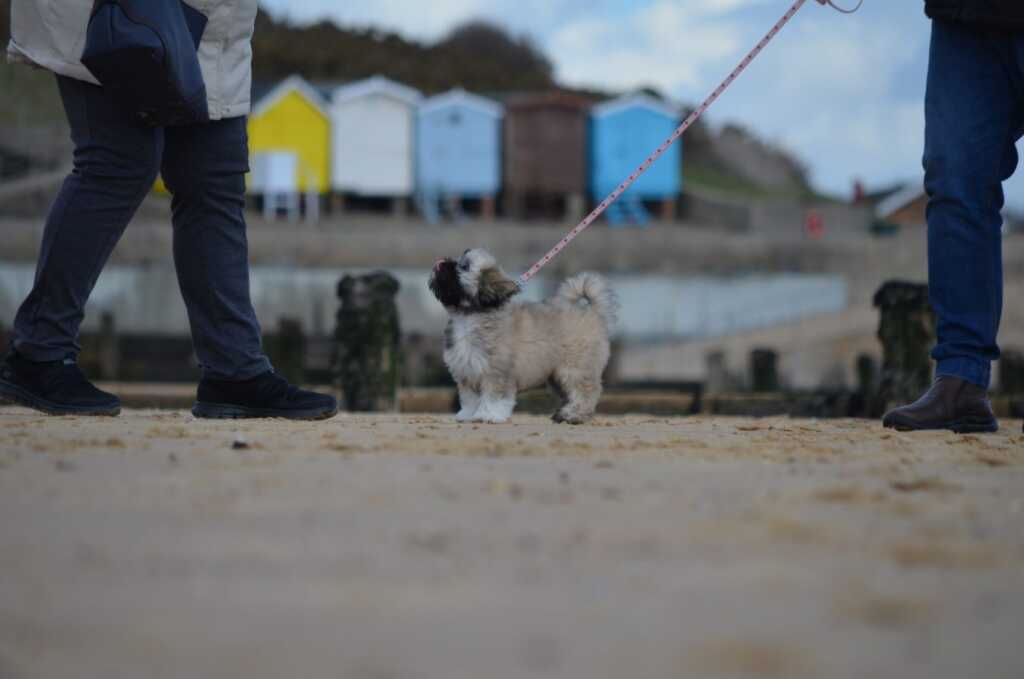
Poppy knows the word “walk.” She knows “treat,” “dinner,” “garden,” and “bed.” She also knows “cat,” despite the fact we’ve never owned one. Say it casually in conversation and she’ll bolt to the back door to scan the garden like a small furry security operative.
Dogs clearly understand some of what we say. But how much? Are they actually processing language, or just reacting to sounds and tone? The answer is more interesting than you’d think, and the research behind it is genuinely fascinating.
What the science says
In 2016, a team at Eötvös Loránd University in Budapest published a study in the journal Science that changed how we think about canine language processing. They trained 13 dogs to lie still in an MRI scanner and measured their brain activity while researchers spoke to them using different combinations of words and tone.

The findings were remarkable. Dogs process language in a way that’s structurally similar to humans. The left hemisphere of the brain handles meaning (the actual word), while the right hemisphere processes intonation (how it’s said). When praise words were spoken in an enthusiastic tone, the brain’s reward centre lit up. When the same words were spoken flatly, or when meaningless words were spoken enthusiastically, the reward response was weaker.
What this means in practice is that your dog isn’t just responding to your tone of voice. They’re actually distinguishing between words. “Good girl” said warmly registers differently from “rubbish” said warmly. They need both the right word and the right delivery for the message to fully land.
How dogs learn words
Dogs learn words through association, not grammar. They don’t understand sentences the way we do. They pick out familiar sounds from the stream of noise and connect them with outcomes they’ve experienced before.
When you say “let’s go for a walk,” your dog probably isn’t parsing the whole sentence. They’re hearing “walk” and linking it to leads, outside, sniffing things, and general excitement. The surrounding words are background noise. It’s the key word that triggers the response.
This is why consistency matters so much in training. If you use “sit” one day and “sit down” the next and “park it” the day after, your dog has three different sounds to process instead of one clear signal. Pick a word for each command and stick with it. Everyone in the household needs to use the same vocabulary too, or you’ll end up with a confused dog who responds to nobody.
How many words can a dog learn?
The average dog can learn around 165 words, according to research by Stanley Coren at the University of British Columbia. Dogs in the top 20% of canine intelligence can learn around 250 words. Some exceptional individuals have gone much further. A Border Collie called Chaser learned over 1,000 words and could categorise objects by shape and function.
Lhasa Apsos aren’t Border Collies, obviously. But they’re smart dogs with a long history of living closely with humans. Poppy understands a good 30 to 40 words reliably. She knows the names of specific toys. Tell her to get “Monkey” and she’ll root through the toy box until she finds it. Ask for “Ratty” and she’ll bring that one instead. It’s not random. She genuinely knows which word matches which object.
The difference with Lhasas is that understanding doesn’t always mean compliance. Poppy knows exactly what “come here” means. Whether she acts on it depends entirely on whether she fancies it at that moment. That independent temperament means she processes the request, weighs it up, and sometimes decides the answer is no. It’s not a failure of comprehension. It’s selective cooperation.
Words vs tone vs body language
Dogs don’t just listen to your words. They read the full package. Your facial expression, your posture, your gestures, and your emotional state all factor into how they interpret what you’re saying.
Research from the Family Dog Project in Hungary (the same group behind the MRI study) found that dogs are unusually skilled at reading human gestures. They follow pointing, they track eye gaze, and they pick up on subtle emotional cues that even our closest primate relatives miss. This ability has developed over thousands of years of co-evolution with humans.
So when you say “good girl” while looking stressed and tense, your dog receives a mixed message. The words say one thing, your body says another. Dogs tend to prioritise body language and tone over the actual words, which is why a calm, relaxed delivery works better in training than an anxious, high-pitched one.
Poppy reads us like a book. She knows when we’re about to leave the house before we’ve said a word, just from the pattern of movements. She knows the difference between putting on shoes for a walk and putting on shoes for work. She’s not psychic. She’s just incredibly observant, which is typical of a breed that was bred to guard and watch everything around them.
Favourite words and emotional responses
Every dog has their greatest hits. The words that get the biggest reaction. For Poppy, “dinner” produces an immediate trot to the kitchen. “Garden” sends her to the back door. “Cat” triggers full alert mode. And “biscuit” gets a level of attention that no other word in the English language can match.
Dogs build these associations through repetition and positive experience. “Walk” becomes exciting because walks are exciting. “Vet” might produce a less enthusiastic response because vet visits are stressful. Over time, your dog builds a vocabulary of emotionally charged words, each one linked to a specific feeling or outcome.
They also pick up on negative language and tone. Poppy knows when she’s done something wrong before we’ve said a word about it. The guilty look (which some researchers argue isn’t actually guilt but a response to our body language) appears the moment she clocks our expression. Dogs are masters at reading the room, and they adjust their behaviour based on what they’re picking up from us.
Can dogs understand concepts?
This is where it gets really interesting. Beyond individual words, can dogs grasp abstract ideas like “bigger,” “smaller,” or “different”?
Studies suggest they can, but it requires intensive training. Research published in the journal Learning and Behavior showed that dogs could be taught to select the larger of two objects or differentiate between categories. It doesn’t come naturally the way word association does, but the capacity is there.
In everyday life, dogs show conceptual understanding in simpler ways. Poppy understands the concept of “outside” regardless of which door we’re near. She understands that different puzzle toys require different approaches to get the treat out. She grasps that certain routines lead to certain outcomes. It’s not language in the human sense, but it’s a level of cognitive processing that goes well beyond simple stimulus-response.
How to communicate better with your dog
Understanding how dogs process language changes how you talk to them. A few practical things make a real difference.
Use consistent, short words for commands. One word per action. Make sure everyone in the house uses the same ones. Dogs learn faster when the signal is clear and doesn’t change.
Match your tone to your message. Warm, upbeat tones for praise. Calm, neutral tones for commands. Avoid shouting, which just creates anxiety and confusion. If your Lhasa is acting like a stubborn toddler, staying calm and consistent works far better than raising your voice.
Pay attention to your body language. Your dog is reading you constantly. If your words say “come” but your body language says “I’m annoyed,” they’ll respond to the body language every time.
And talk to your dog. Seriously. Dogs that are spoken to regularly develop larger vocabularies and respond better to communication. It doesn’t matter that they don’t understand every word. The act of being spoken to keeps them engaged, attentive, and connected to you.
Poppy gets spoken to constantly. Full sentences, questions, commentary on what we’re doing. She probably understands about 10% of the words and 100% of the intent. And that, according to the research, is pretty much exactly how canine language comprehension works. They get the gist. They read the feeling. And they respond accordingly, in their own time, on their own terms.
Important information
Information provided by LhasaLife should not be taken as professional veterinary advice or clinical advice. It is important to consult a licensed veterinarian for any health concerns or issues with your pet. The content of the article Can dogs understand words? should not be used as a substitute for veterinary care, or treatment advice for you or your pet, and any reliance on this information is solely at your own risk.
This article may contain affiliate links, meaning we may earn a small commission at no extra cost to you if you purchase through these links. Affiliate links do not necessarily imply an endorsement of the product by LhasaLife. However, we only share products we believe could be helpful to you and your beloved Lhasa Apso. Your support helps us keep the website running and full of useful content.




I have had several dogs to whom I have been able to teach basic abstract words. These have included “smart”, “opposite”, and “word.” One of these dogs was Barney, a Lhasa Apso mix. He was a wonderful dog, but it was an added treat that I was able to teach him this way and that he loved to learn.