


This is the hill we will die on. Poppy sleeps on our bed, and we wouldn’t have it any other way. She’s been doing it for years, and frankly, she’d stage a full protest if we tried to change the arrangement now.
But it’s a question that divides dog owners like nothing else. Some think it’s unhygienic. Others say it causes behavioural problems. And then there are people like us who can’t imagine bedtime without a small furry body wedging itself between the pillows.
So who’s right? Let’s look at what actually happens when you share your bed with your dog, what the research says, and why Lhasa Apsos in particular make surprisingly good (and occasionally annoying) bed companions.

How Poppy ended up on the bed
When Poppy arrived as a puppy, she slept in a crate in the kitchen. We filled it with toys, left the door open, and felt very responsible about the whole thing. That lasted about six weeks.
The problem was her independent temperament. She didn’t cry or whine at bedtime. She just made it very clear, in that stubborn Lhasa way, that the kitchen was beneath her. Once we moved her bed upstairs to our bedroom, she seemed content. Then she learned to jump on furniture. Then she discovered our bed was warmer, softer, and came with humans to lean against. That was that.
Now she has a specific spot. Top of the bed, dead centre, between the pillows. She doesn’t ask permission. She just appears there, like a small furry ghost who happens to snore.
What the research actually says
The American Kennel Club surveyed dog owners and found that around 45% let their dogs sleep in the bed with them. Another study from the Mayo Clinic’s Center for Sleep Medicine found that having a dog in the bedroom didn’t significantly disrupt sleep quality, though having them on the bed (rather than just in the room) did cause slightly more movement during the night.
On the positive side, research published in the journal Anthrozoös found that women who slept with their dogs reported feeling more secure and comfortable than those who slept with a human partner. Dogs were associated with stronger feelings of comfort and security, and they were less likely to disturb sleep than another person.
There’s a hormonal element too. Being close to your dog increases oxytocin levels in both of you. It’s the same bonding hormone that fires when a parent holds their child. So when Poppy curls up against our legs at night, there’s actual chemistry happening. It’s not just sentiment.
The case for letting your dog on the bed
Dogs are pack animals. In the wild, they sleep together for warmth, protection, and social bonding. When your dog chooses to sleep near you, they’re doing what thousands of years of instinct tells them to do. They’re not being clingy or naughty. They’re being a dog.
For Lhasa Apsos, this instinct runs even deeper. These dogs were bred as sentinel guards in Tibetan monasteries, sleeping alongside monks and alerting them to intruders. Sharing a sleeping space with their human isn’t spoiling them. It’s literally what they were designed for.
Poppy takes this duty seriously. She sleeps lightly, and any unusual noise in the night gets an immediate response. It’s reassuring, actually. Less reassuring when the “threat” turns out to be a fox knocking over a bin at 3am, but you can’t fault the commitment.
If your Lhasa follows you from room to room during the day, being near you at night is a natural extension of that bond. It’s attachment behaviour, and for many dogs, sleeping apart causes more stress than sleeping together.
The case against it
Fair’s fair. Not everyone should share their bed with a dog, and there are legitimate reasons not to.
Allergies are the obvious one. Even breeds like Lhasa Apsos, which are often considered lower-shedding, still produce dander. If anyone in the household has respiratory issues, the bedroom might need to stay a dog-free zone.
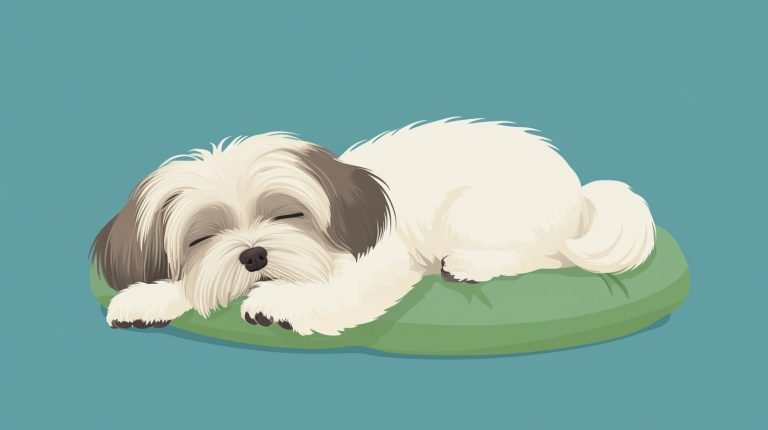
Sleep disruption is another. Some dogs are restless sleepers, and if your dog moves around a lot, scratches, or takes up more than their fair share of space, your sleep quality will suffer. Poppy, for the record, sleeps like the dead. Barely moves all night. But not every dog is like that.
There’s also the hygiene question. Dogs go outside, walk through mud, roll in things you’d rather not think about, and then jump on your clean sheets. Regular grooming and washing bedding more frequently helps, but it’s a valid concern.
And then there’s the behavioural argument. Some trainers worry that sharing a bed can create resource guarding or separation anxiety. In our experience with Poppy, this hasn’t been an issue. She’s happy to sleep elsewhere if she chooses. But if your dog already shows signs of boundary-pushing behaviour, it’s worth thinking about whether the bed is reinforcing that.
The Lhasa Apso bed experience
If you’re going to share a bed with any breed, a Lhasa Apso is a pretty good choice. They’re small enough not to take over the entire mattress (though Poppy tries), they sleep deeply once they’re settled, and their creature of habit nature means they find a spot and stick with it.
Lhasas are also relatively clean dogs. They don’t drool, they’re not heavy shedders compared to many breeds, and they tend to keep themselves tidy. A regular grooming routine and mat-free coat means less mess on the bedding.
The only real downside is the snoring. Poppy snores. Not loudly, but consistently enough that it becomes background noise. We’ve gotten used to it. Guests who stay over sometimes ask what the noise is. It’s a 7kg dog who sounds like a tiny outboard motor.
Making it work if you do share
If you’re going to let your dog on the bed, a few things make the experience better for everyone.
Keep up with grooming. A clean dog means cleaner bedding. Brush your Lhasa regularly and keep on top of their grooming schedule. Wash your sheets and pillowcases more often than you would otherwise. A mattress protector is a sensible investment too.
Make sure your dog is healthy. Flea and tick treatments should be completely up to date. Worm them regularly. Nobody wants uninvited microscopic guests in the bed.
Give them their own space as well. Even if they choose to sleep on your bed, having their own bed in the room means they’ve got an option if they get too warm or want some space. Poppy has a bed on the floor that she uses about 30% of the time. The other 70%, she’s on ours.
And establish the routine early. If you’re bringing a new puppy home, decide upfront whether the bed is going to be allowed. Changing the rules later is much harder than setting them from the start, especially with a breed as stubborn as a Lhasa. Consistent training from the beginning saves a lot of negotiation down the line.
What if you’d rather they didn’t?
No judgement at all. Plenty of happy, well-adjusted dogs sleep in their own beds. The key is making their sleeping spot comfortable and giving them positive associations with it. A cosy bed in your bedroom is a good compromise. Your dog still gets the closeness of being near you without being on the mattress.
For puppies, crate training works well if it’s introduced gently. Make the crate a positive place with treats and familiar smells, and never use it as punishment. Most Lhasas will accept a crate happily enough as long as they don’t feel banished.
And if your dog has been on the bed for years and you’re trying to change things, patience is everything. Lhasas are strong-willed, and they don’t take kindly to having privileges revoked. Gradual transition works better than a sudden ban.
Our verdict
We’ve shared a bed with Poppy for over a decade. She’s warm, she’s comforting, and she makes us feel safe in a way that’s hard to explain until you’ve experienced it. Yes, she takes up more space than a dog her size should. Yes, the sheets need washing more often. And yes, she once pushed one of us so far to the edge of the mattress that they woke up hanging off the side.
Worth it? Absolutely. But it’s a personal choice, and there’s no wrong answer. What matters is that your dog feels secure, your sleep isn’t wrecked, and everyone in the house is happy with the arrangement. Dogs that feel close to their humans are calmer, more confident, and more settled. Whether that closeness happens on the bed or beside it is entirely up to you.
Poppy, for the record, has already made her choice. She’s currently asleep on our pillow. We didn’t get a vote.
Important information
Information provided by LhasaLife should not be taken as professional veterinary advice or clinical advice. It is important to consult a licensed veterinarian for any health concerns or issues with your pet. The content of the article Should your dog be allowed to sleep on your bed? should not be used as a substitute for veterinary care, or treatment advice for you or your pet, and any reliance on this information is solely at your own risk.
This article may contain affiliate links, meaning we may earn a small commission at no extra cost to you if you purchase through these links. Affiliate links do not necessarily imply an endorsement of the product by LhasaLife. However, we only share products we believe could be helpful to you and your beloved Lhasa Apso. Your support helps us keep the website running and full of useful content.



Comments