
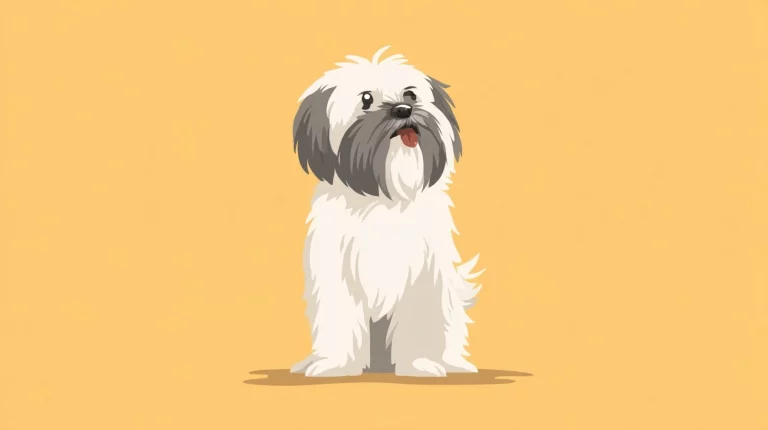
If you’ve ever scrolled through Lhasa Apso photos online and wondered whether you were looking at the same breed twice, you’re not alone. Few dogs offer quite the range of looks that a Lhasa does. One minute they’re a walking floor mop with eyes barely visible beneath a curtain of silk; the next, they’re sporting a neat teddy bear trim that makes them look like an entirely different animal.

Choosing the right Lhasa Apso grooming style isn’t just about aesthetics, though. It affects how much time you’ll spend brushing, how comfortable your dog feels in warmer months, and how often you’ll need to visit a professional groomer. We’ve had Poppy in just about every style over the years, and each one comes with its own set of perks and trade-offs.
The show coat: stunning but high maintenance
The traditional Lhasa Apso show coat is the one you see at Crufts and the Westminster Kennel Club. It’s a long, flowing, floor-length curtain of hair that parts down the middle of the back and cascades to the ground on both sides. When done properly, it’s breathtaking. The Kennel Club breed standard describes the coat as “top coat heavy, straight and hard, not woolly or silky, of good length.”
But here’s the reality: maintaining a full show coat is practically a part-time job. You’re looking at daily brushing sessions of 30 minutes or more, regular conditioning treatments, and the kind of dedication that most pet owners simply don’t have time for. The coat mats incredibly easily, especially around the ears, behind the legs, and under the belly. Miss a couple of days and you’ll be dealing with tangles that would make a sailor weep.
Most Lhasa owners who keep a show coat are either showing their dogs competitively or are genuinely passionate about coat maintenance. If that sounds like you, brilliant. If the thought of daily grooming makes you want to hide under the sofa (much like Poppy does when she spots the slicker brush), read on.
The puppy cut: low maintenance and adorable
The puppy cut is by far the most popular Lhasa Apso grooming style for pet owners, and it’s easy to see why. The coat is trimmed to a uniform length all over the body, typically between one and two inches. The result is a dog that looks perpetually young, ridiculously cute, and roughly 40% less dramatic about bath time.
With a puppy cut, brushing drops from a daily chore to a couple of times a week. Mats become far less of a problem because there simply isn’t enough length for them to form easily. Your Lhasa will also stay cooler in summer, pick up less dirt on walks, and generally spend less time looking like they’ve been dragged through a hedge backwards.
The trade-off? You’ll need professional grooming every six to eight weeks to keep the cut looking sharp. Between visits, a quick brush-through and the occasional bath will keep things tidy. It’s the closest thing to a wash-and-go style you’ll get with a Lhasa Apso.
The teddy bear cut: the best of both worlds
The teddy bear cut sits somewhere between the puppy cut and a longer style. The body is trimmed fairly short, but the face and head are left slightly longer and rounded off to create that soft, stuffed-animal look. The legs are often left a touch fuller too, giving your Lhasa a stocky, cuddly appearance that earns double-takes from strangers on every walk.
This style works particularly well on Lhasas because of their naturally round heads and expressive dark eyes. When the facial hair is shaped properly, it frames the face beautifully without obscuring their vision. It’s the style Poppy rocks most often, and we’ve lost count of the number of times someone has stopped us to say she looks like a little teddy bear. Which, frankly, she already knows.
Maintenance-wise, the teddy bear cut needs attention every six to eight weeks from a groomer, with regular brushing of the longer facial hair in between. The body stays manageable, but the face and ears will need a daily once-over to prevent food debris and tangles building up.
The top knot style: keeping it out of their eyes
Whether you’re growing out a show coat or just prefer a longer look, the top knot is a practical solution to one of the Lhasa Apso’s biggest daily challenges: seeing where they’re going. A small elastic or clip gathers the hair on the crown of the head and pulls it up and back, clearing the eyes and giving your dog an unobstructed view of the world.
Top knots aren’t just for show dogs. Many pet owners with medium-length coats use them to keep hair out of their Lhasa’s eyes between grooming appointments. It takes seconds to do, and most Lhasas tolerate it well once they’re used to it. Some even seem to enjoy the process, though we suspect that’s more about the treats that follow than any genuine appreciation for hair styling.
The lion cut: bold and breed-appropriate
Given that “Lhasa Apso” roughly translates to “bearded lion dog,” the lion cut feels almost inevitable. This style keeps the hair around the head, chest, and shoulders long while trimming the body and hindquarters quite short. The result is a miniature lion with a dramatic mane and a sleek back end.
The lion cut is less common than the puppy or teddy bear styles, but it has a dedicated following among Lhasa owners who appreciate the breed’s historical connection to Tibetan monasteries, where they were valued as lion-like sentinels. It’s a conversation starter, that’s for certain.
From a practical standpoint, the lion cut offers moderate maintenance. The mane section still needs regular brushing, but the short body is virtually care-free. It’s a good option for owners who want their Lhasa to stand out without committing to a full show coat.
How to choose the right style for your Lhasa
The best Lhasa Apso grooming style depends on your lifestyle, your dog’s comfort, and how much time you’re genuinely willing to spend with a brush in your hand. Be honest with yourself here. We all start with grand ambitions of maintaining a glorious flowing coat, but life gets in the way, and a matted Lhasa is an unhappy Lhasa.
Consider the climate too. If you live somewhere warm or your Lhasa runs hot, a shorter cut will keep them far more comfortable. Dogs can’t regulate their temperature as efficiently as we can, and a heavy coat in summer is genuinely uncomfortable for them. The matting prevention guide we put together goes into more detail about keeping coats healthy regardless of length.
Your groomer’s skill matters too. Not every groomer has experience with Lhasa Apsos, and the breed’s double coat behaves differently from single-coated breeds. It’s worth finding a groomer who knows the breed and can advise on what will work best for your dog’s specific coat texture.
Grooming between appointments
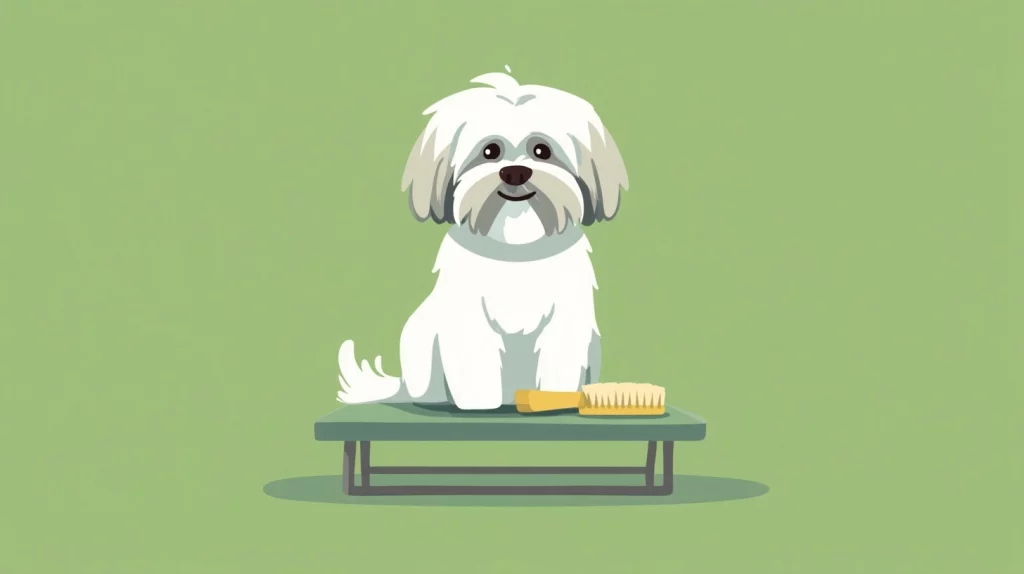
Whatever style you choose, regular at-home grooming is non-negotiable with a Lhasa Apso. Their double coat is prone to matting, and even short styles need a brush-through to remove dead undercoat and distribute natural oils.
A slicker brush and a metal comb are your two best friends. The slicker brush handles the bulk of the work, and the comb catches any small tangles the brush misses. Always brush in the direction of hair growth, working in sections from the skin outward. If you hit a tangle, hold the base of the mat against the skin and work it apart gently with the comb rather than pulling. Your Lhasa will thank you. Probably not out loud, but you’ll notice fewer dramatic sighs during grooming sessions.
Don’t forget the ears, paws, and sanitary areas. These spots are mat magnets and are easy to overlook. A quick check after every walk will save you a lot of grief later. Our complete grooming guide covers the full routine in detail.
The bottom line
There’s no single “correct” Lhasa Apso grooming style. The show coat is magnificent but demands serious commitment. The puppy cut is practical and adorable. The teddy bear cut offers charm with manageable upkeep. The lion cut is bold and historically fitting. And the top knot works as a practical addition to any longer style.
What matters most is that your Lhasa is comfortable, well-maintained, and not secretly plotting revenge because you’ve let their coat turn into one giant mat. A happy Lhasa is a well-groomed Lhasa, regardless of the style.
What grooming style does your Lhasa rock? Are they a teddy bear, a puppy cut loyalist, or living their best show coat life? Drop us a comment below!
Important information
Information provided by LhasaLife should not be taken as professional veterinary advice or clinical advice. It is important to consult a licensed veterinarian for any health concerns or issues with your pet. The content of the article Lhasa Apso grooming styles: from puppy cut to show coat should not be used as a substitute for veterinary care, or treatment advice for you or your pet, and any reliance on this information is solely at your own risk.
This article may contain affiliate links, meaning we may earn a small commission at no extra cost to you if you purchase through these links. Affiliate links do not necessarily imply an endorsement of the product by LhasaLife. However, we only share products we believe could be helpful to you and your beloved Lhasa Apso. Your support helps us keep the website running and full of useful content.

Comments