


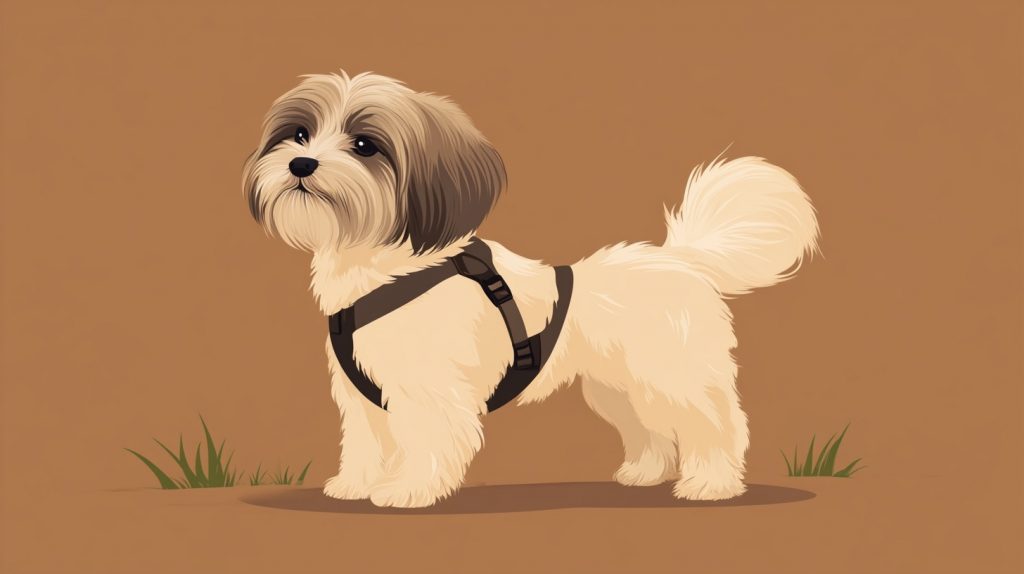
If you have ever tried walking a Lhasa Apso on a standard collar, you already know the problem. They pull. They stop dead. They pull again. They spot a squirrel and transform into a tiny, furry battering ram. A collar puts all that pressure on their throat, and for a small breed with a relatively delicate trachea, that is not ideal.

A good harness changes everything. It distributes pressure across the chest and shoulders, gives you better control without the choking risk, and keeps your Lhasa comfortable even when they are having one of their “I refuse to walk past that particular drain” moments.
But not all harnesses are created equal, especially when you factor in a Lhasa Apso’s long, thick coat. We have tested plenty over the years with Poppy, and here are the ones that actually work.
What to look for in a Lhasa Apso harness
Before we get into specific picks, there are a few things worth knowing about choosing a harness for this breed.
Coat-friendly design. Lhasa Apsos have a long, dense double coat that tangles at the slightest provocation. Harnesses with lots of straps, rough edges, or Velcro will turn your dog into a walking mat. Look for smooth linings and minimal strap crossover points.
Correct sizing. Lhasas are small but barrel-chested for their size. Most adults need a small or extra-small harness, but always measure around the widest part of the ribcage. A harness that is too loose will slip. One that is too tight will rub.
Step-in vs over-head. Some Lhasas hate having things pulled over their head (Poppy gives us the look of ultimate betrayal every time). A step-in harness avoids that drama entirely. You lay it flat, your dog steps into it, and you clip it up. Done.
Back clip vs front clip. For most Lhasa owners, a back-clip harness works brilliantly. Front-clip designs are meant for dogs that pull hard on walks, and while Lhasas can be stubborn, they are not exactly dragging you down the street like a Husky would.
Our top harness picks for Lhasa Apsos
1. Julius-K9 IDC Powerharness (Mini)
This is probably the most popular harness we see on Lhasas at the park, and for good reason. The chest strap sits comfortably without riding up, the Velcro patches are on the outside (not against the coat), and the handle on top is genuinely useful for lifting a stubborn Lhasa over a puddle they have decided is a lake of lava.
The Mini size fits most adult Lhasa Apsos with a chest measurement of 49-67cm. It is an over-head design, so if your dog hates that, skip to the next option.
Browse Julius-K9 IDC Powerharness on Amazon
2. Rabbitgoo no-pull dog harness
A brilliant budget option that punches well above its price. The Rabbitgoo has both front and back clip points, padded straps, and a breathable mesh lining that is kind to longer coats. It is a step-in style with four adjustable straps, which means you can get a really precise fit.
We have used this one as a backup harness for years and it has held up remarkably well. The only downside is that the mesh can collect loose hair over time, so give it a shake out after walks.
Browse Rabbitgoo harnesses on Amazon
3. Ruffwear Front Range harness
If you want something that will last for years and can handle proper outdoor adventures, the Ruffwear Front Range is the one. It is padded in all the right places, has two lead attachment points, and the straps are designed to sit between the legs rather than across the shoulders, which is much better for dogs with long coats.
It is pricier than the others, but you are paying for quality that genuinely shows. The XXS or XS fits most Lhasa Apsos.
Browse Ruffwear Front Range on Amazon
4. Puppia Soft Vest harness
The Puppia is a favourite among small dog owners for a reason. It is incredibly lightweight, soft as anything, and slips on like a little jacket. There is almost no hardware touching the coat, which makes it one of the best choices for Lhasas who are prone to matting.
The trade-off is that it offers less control than a structured harness, so it is better suited to calm walkers rather than Lhasas who turn into tiny lunatics at the sight of a pigeon.
Browse Puppia Soft Vest on Amazon
Getting your Lhasa used to a harness
Some Lhasas take to a harness immediately. Others act as though you have strapped a medieval torture device to their body and refuse to move. If your dog falls into the second camp, take it slowly.
Start by letting them sniff the harness. Then drape it over their back without fastening it. Then fasten it for a few minutes indoors with plenty of treats. Build up gradually until they associate the harness with walks and good things, not with a wrestling match in the hallway.
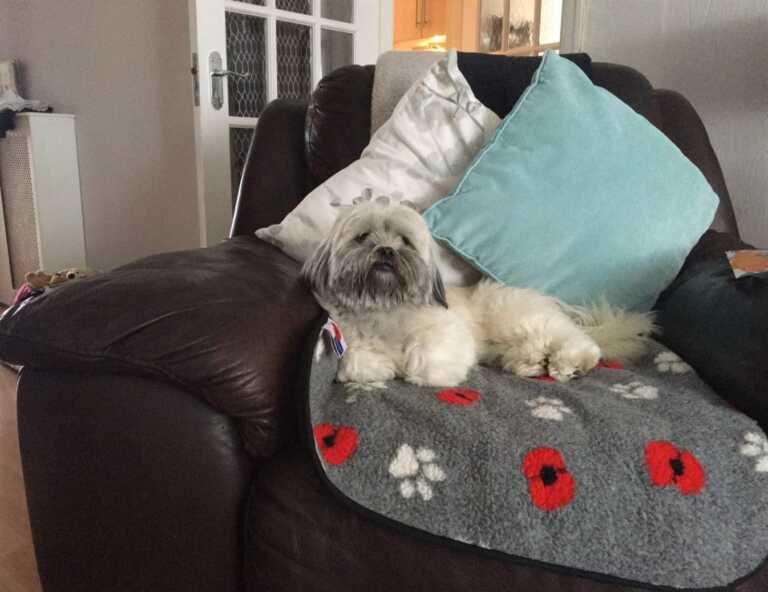
Poppy was a harness refuser for her first few months. She would go completely rigid, like a small furry statue, and refuse to take a single step. We got past it with patience, chicken treats, and the understanding that Lhasa Apsos will always do things on their own schedule.
Harness care tips for long-coated breeds
A quick note on maintenance. With a long-coated breed like a Lhasa Apso, your harness will collect loose hair, dander, and general grime faster than you would expect. Give it a hand wash in warm soapy water every couple of weeks. Check the straps for any rough spots that could snag the coat. And if you notice any rubbing or bald patches under the harness, it is time to adjust the fit or try a different style.
If you are dealing with matting issues in general, our guide to preventing matting in your Lhasa’s coat covers everything you need to know.
The bottom line
Any of the harnesses above will serve your Lhasa Apso well. The Julius-K9 is the all-rounder, the Rabbitgoo is the budget winner, the Ruffwear is the premium choice, and the Puppia is best for gentle walkers with sensitive coats.
The most important thing is that it fits properly, does not tangle the coat, and keeps your dog comfortable on their daily walks. Get those three things right and you will both enjoy your time outside a lot more.
Got a harness recommendation of your own? Or a horror story about a harness your Lhasa absolutely destroyed? Drop it in the comments below.
Important information
Information provided by LhasaLife should not be taken as professional veterinary advice or clinical advice. It is important to consult a licensed veterinarian for any health concerns or issues with your pet. The content of the article Best harness for a Lhasa Apso: 2026 picks for small dogs should not be used as a substitute for veterinary care, or treatment advice for you or your pet, and any reliance on this information is solely at your own risk.
This article may contain affiliate links, meaning we may earn a small commission at no extra cost to you if you purchase through these links. Affiliate links do not necessarily imply an endorsement of the product by LhasaLife. However, we only share products we believe could be helpful to you and your beloved Lhasa Apso. Your support helps us keep the website running and full of useful content.




Comments