


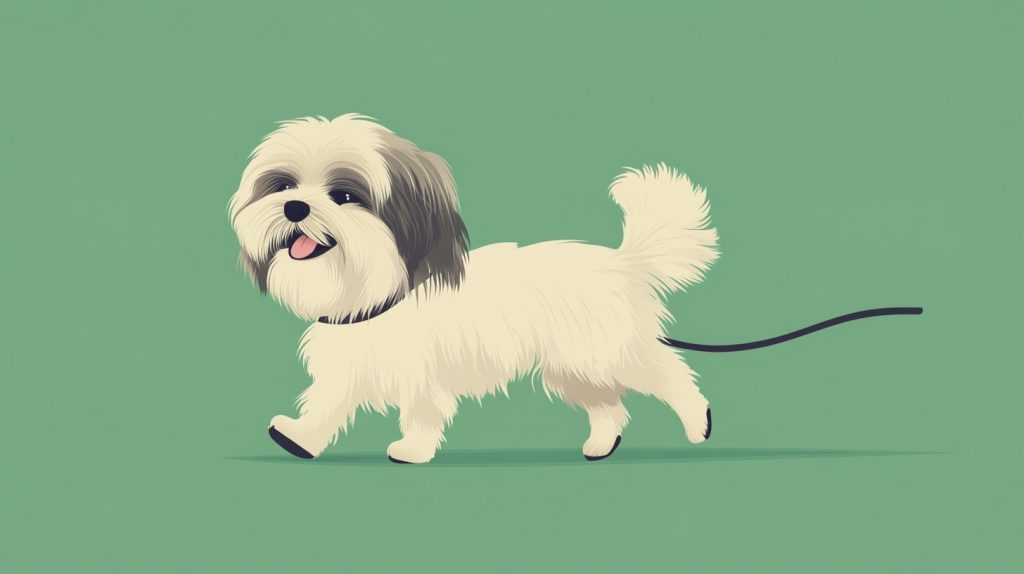
A healthy adult Lhasa Apso needs roughly 30 minutes of exercise a day. That’s the headline. But the full story is more interesting than a single number, because how you fill those 30 minutes matters just as much as ticking them off.

Lhasas weren’t bred to herd sheep or retrieve ducks. They were monastery sentinels, built for alertness and short bursts of activity rather than endurance. That heritage still shows. Your Lhasa wants to walk, sniff, explore, and then collapse on the sofa like they’ve run a marathon. They’re active enough to enjoy a good outing, but sensible enough to know when they’re done.
We’ve lived through every stage of exercise with Poppy, from the chaotic puppy sprints to the gentler senior strolls. This guide covers what we’ve learned, what the research says, and what actually works in practice.
How much exercise does a Lhasa Apso need?
About 30 minutes daily for a healthy adult. That can be one walk or split across two shorter outings. Most Lhasas genuinely prefer two walks over one longer slog, partly because they’re creatures of routine who like their day broken into predictable chunks.
Those 30 minutes don’t need to be power walks. Lhasas are sniffers, not sprinters. A 20-minute wander where they investigate every lamppost and hedge is more satisfying to them than a brisk march around the block. Let them set the pace sometimes. You’ll both enjoy it more.
The flexibility is one of the breed’s best selling points. Whether you live in a flat with a nearby park or a countryside house with acres of garden, they adapt. If you’re weighing up whether a Lhasa suits your lifestyle, our guide on whether Lhasas work for first-time owners covers the exercise question alongside everything else you’d want to know.
Exercise by age: puppies, adults and seniors
Lhasa Apso puppies (8 weeks to 12 months)
Puppies are furry chaos machines with the attention span of a goldfish. They’ll sprint, tumble, wrestle, and crash out asleep within seconds. All of that energy needs direction, but it also needs limits.
The rule of thumb is five minutes of structured exercise per month of age, twice daily. A four-month-old gets roughly 20 minutes morning and evening. That’s structured walking or play, not free-range garden madness (which they’ll do regardless and that’s fine).
Growth plates in their legs don’t fully close until around 18 months. Repetitive pounding on hard surfaces, long lead walks, or too much jumping stresses developing joints. Keep sessions short, playful, and on softer ground where you can. Fetch in the garden, tug-of-war, socialising with other puppies. These all count.
Poppy was a whirlwind as a pup. She’d have happily charged around for hours if we’d let her. We didn’t. Short sessions, lots of variety, and plenty of rest between. That discipline kept her joints healthy well into her senior years. It’s boring advice, but it works. If you’re navigating those early months, our puppy training basics piece has more on building good habits from the start.
Adult Lhasa Apsos (1 to 8 years)
This is their prime. Your Lhasa’s personality is fully formed, and you’ll quickly learn whether you’ve got a keen walker or a happy potter. Some adults love a solid 40-minute ramble. Others are content with a couple of 15-minute jaunts and some garden time. Both are perfectly normal.
The 30-minute guideline works as a baseline, but watch your dog rather than the clock. A Lhasa that’s still bouncing around the house after their walk probably needs a bit more. One that’s zonked out on the sofa within minutes of getting home has had enough. Getting to know your individual dog’s temperament makes the whole exercise thing much easier to judge.
A decent harness makes walks more comfortable for both of you, especially if your Lhasa pulls (and plenty of them do, usually towards something they want to sniff).
Senior Lhasa Apsos (8+ years)
Lhasas are a long-lived breed, often reaching 15 years or more, so the senior phase covers a decent stretch. Exercise doesn’t stop at 8. It just changes shape.
At 10, Poppy does around 20 to 25 minutes of walking most days. She’s slower, pickier about routes, and sometimes decides a walk is finished well before we do. We listen to her. Some days she’s full of beans. Others she’d rather potter round the garden and call it done.
Watch for stiffness after walks, reluctance to jump onto furniture, or limping. These are signs their joints are talking, and it’s worth chatting with your vet about supplements or pain management. Softer surfaces like grass and woodland paths are kinder than pavement. Shorter, more frequent outings tend to suit older dogs better than one long trek.
Mental stimulation matters just as much
Here’s the thing new Lhasa owners often miss: a tired body isn’t enough. These dogs are properly clever. Their brains need work too. A Lhasa that’s physically walked but mentally bored will still chew your shoes and bark at nothing.
Puzzle toys are brilliant for this. Snuffle mats, treat-dispensing balls, interactive feeders. Anything that makes them think and problem-solve. Poppy gets a dedicated brain session most days, usually hiding treats around the house or short training work, and the difference in how settled she is afterwards is night and day.
Other ideas that work well: teaching new tricks (Lhasas learn fast when they fancy it), scent games where you hide a favourite toy, indoor obstacle courses using cushions and chairs, or simply scattering their dinner across the lawn so they have to forage for it. Novelty keeps things interesting. Rotate toys, change up the games, keep them guessing.
The risks of over-exercising your Lhasa Apso
Because Lhasas are sturdy and game for a walk, it’s tempting to push them further than they should go. They won’t always tell you they’ve had enough. Some will keep walking until they’re properly exhausted, then suffer for it the next day.
In puppies, over-exercise damages growing joints and can lead to dysplasia or long-term lameness. In adults, it stresses ligaments (particularly the knees) and accelerates arthritis. In seniors, it causes pain, stiffness, and reluctance to walk at all.
Signs you’ve overdone it include excessive panting, lameness during or after the walk, stiffness the following morning, or your dog refusing to go out the next day. If any of these become a pattern, cut back and talk to your vet. Poppy could happily tag along on five-mile hikes, but we’ve never let her. Keeping within her limits is the reason she’s still moving well at 10.
Exercise in hot and cold weather
That gorgeous Lhasa coat is a double-edged sword when it comes to temperature. In summer, they overheat faster than shorter-coated breeds. Walk early in the morning or in the evening when the pavement’s cooled down. Keep the pace gentle. Carry water. If your Lhasa is panting heavily, drooling, or looks glazed, get them into shade and cool them down immediately. Heat stress in dogs is serious and can escalate fast.
Winter is their season. Lhasas love cooler weather, and that thick coat provides decent insulation. Muddy walks become the norm, which means more grooming and more bath days. If temperatures drop below freezing regularly, a coat for walks isn’t a bad idea for older dogs. Check paws after snowy or salted roads for ice balls and irritation.
Poppy is noticeably happier in autumn and winter. She walks further, moves faster, and actually seems to enjoy herself rather than enduring the heat. We adjust her routine seasonally, and honestly, she seems to appreciate it.
Indoor exercise and enrichment ideas
Terrible weather, feeling rough, or just one of those days? Indoor exercise keeps your Lhasa ticking over when outdoor walks aren’t happening. It’s not a perfect replacement, but it’s far better than nothing.
Stair climbing uses different muscles than flat walking and is surprisingly tiring. Hallway fetch works if you’ve got the space. Indoor obstacle courses using cushions, low stools, and weaving poles made from broom handles are great fun (and quietly hilarious to watch). Training sessions count as exercise too. Ten minutes of learning something new genuinely knackers a Lhasa mentally.
If your garden is set up for dogs, even a short potter outside during a break in the rain helps. Poppy’s not a fan of drizzle, but she’ll tolerate a quick garden circuit if there’s a treat waiting at the end.
Signs your Lhasa Apso isn’t getting enough exercise
An under-exercised Lhasa is a problem Lhasa. Not because they’re naughty, but because all that unspent energy has to go somewhere. The signs are hard to miss once you know what to look for.
Excessive barking at seemingly nothing is the classic one. Destructive chewing, jumping at people, pacing, hyperactivity indoors, and general restlessness are all red flags. Some develop repetitive behaviours like tail-chasing. Others become grumpy or nippy, not from aggression, but from sheer frustration.
A bored Lhasa will also eat things they shouldn’t, dig up the garden, and attempt creative escapes. Their brains are too sharp to sit idle. If your Lhasa is suddenly acting out, the first thing to audit is their exercise and mental stimulation. Nine times out of ten, the behaviour improves once they’re properly tired.
Poppy’s exercise routine
At 10, Poppy’s found her rhythm. Most mornings she gets a 30 to 40 minute walk on quiet country lanes and woodland paths. She’s a sniffer, not a strider. Twenty minutes on a single patch of undergrowth is her idea of heaven. Open fields bore her. She likes texture, scent, and things to investigate.
Afternoons are lighter. If the weather’s decent she’ll potter round the garden or we’ll do a short village loop. If it’s raining, she’ll stare at the door, look at us like we’ve personally offended her, and settle for indoor games instead. She’s dramatic like that. If you’ve ever wondered why your Lhasa follows you from room to room, Poppy does this too, especially on indoor days when she’s decided she needs company more than exercise.
A few times a week we do a dedicated enrichment session. Hiding treats, puzzle toys, or short training work. These keep her mind sharp and honestly seem to matter more to her now than covering distance. The result is a dog that’s fit, settled, sleeps deeply, and hasn’t developed any of the anxious or destructive habits that under-stimulated dogs pick up.
FAQ
Can I exercise my Lhasa Apso at a dog park?
Yes, but keep an eye on them. Lhasas can be territorial and selective about which dogs they like. Off-lead play should only happen if you’re confident they’ll recall and get on with whoever’s there. Some are social butterflies. Others would rather not. Know your dog’s personality first. We’ve written more about this in our piece on whether Lhasas get along with other dogs.
What’s the best time of day to walk a Lhasa Apso?
Whatever works for you consistently. Morning walks help settle them for the day. Evening walks help them sleep. Most owners split it with a walk in the morning and another later on. Consistency matters more than the exact time. Poppy’s always been a morning walker, but that’s her preference, not a rule.
Is swimming good exercise for Lhasa Apsos?
Most Lhasas aren’t natural swimmers. Their coat gets heavy when wet and they tire quickly in water. Some enjoy a paddle in shallow streams or garden paddling pools, which is fine. But formal swimming for fitness isn’t ideal for the breed. If you want to try it, introduce them young and keep it shallow and fun.
How do I know if my senior Lhasa needs less exercise?
Watch their behaviour over weeks, not individual days. Genuine ageing shows as consistently slower movement, reluctance to jump or tackle stairs, longer recovery after walks, or recurring stiffness. One off day means nothing. A pattern means it’s time to adjust. Your vet can help you figure out whether it’s normal ageing or something worth investigating.
Exercise isn’t something you do to a Lhasa. It’s something you do with them. Get the balance of physical and mental activity right, and you’ll have a calm, happy, healthy companion who stays that way for years. Poppy’s proof that it works. Now get out there and give your Lhasa a good walk. They’re ready, even if they’re pretending they’re not.
Important information
Information provided by LhasaLife should not be taken as professional veterinary advice or clinical advice. It is important to consult a licensed veterinarian for any health concerns or issues with your pet. The content of the article Lhasa Apso Exercise Needs: The Complete Guide by Age should not be used as a substitute for veterinary care, or treatment advice for you or your pet, and any reliance on this information is solely at your own risk.
This article may contain affiliate links, meaning we may earn a small commission at no extra cost to you if you purchase through these links. Affiliate links do not necessarily imply an endorsement of the product by LhasaLife. However, we only share products we believe could be helpful to you and your beloved Lhasa Apso. Your support helps us keep the website running and full of useful content.




Comments