



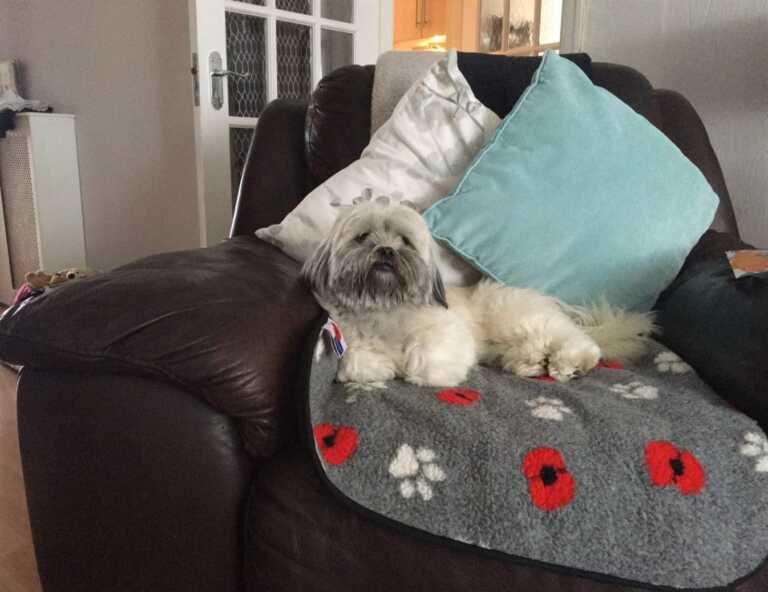
Let us be upfront about this: most Lhasa Apsos absolutely hate having their nails trimmed. Poppy acts as though we are attempting medieval torture every single time. There is wriggling, there is dramatic whimpering, and there is the occasional attempt to flee the scene entirely. But it needs doing, and with the right approach, you can make it a lot less stressful for both of you.

Why nail trimming matters
Overgrown nails are not just a cosmetic issue. When a dog’s nails get too long, they change how the foot sits on the ground, which puts pressure on the joints and can lead to pain, altered gait, and long-term problems. For a small breed like a Lhasa Apso, this is especially important because their little legs are already doing a lot of work carrying that luxurious coat around.
If you can hear your Lhasa’s nails clicking on hard floors, they are too long. The nails should sit just above the ground when your dog is standing naturally.
Clippers vs nail grinders
You have two main options for trimming your Lhasa’s nails at home: guillotine or scissor-style clippers, or an electric nail grinder (sometimes called a Dremel, after the brand name).
Nail clippers
Quick, cheap, and effective. Guillotine clippers work well for small dogs because they are easy to position on smaller nails. The downside is that they cut rather than grind, so if you cut too short, you will hit the quick (the blood vessel inside the nail) and it will bleed. This is painful for your dog and tends to make future nail trimming sessions significantly more dramatic.
For Lhasa Apso nails, a small or medium guillotine clipper is usually the right size. Browse small dog nail clippers on Amazon
Nail grinders
Electric grinders file the nail down gradually rather than cutting it. This gives you much more control and makes it nearly impossible to hit the quick if you go slowly. The trade-off is that they take longer and the vibration and noise can bother some dogs.
We switched to a grinder a few years ago and it was a game changer for us. Poppy tolerates the grinder far better than clippers, and the results are smoother with no sharp edges. Browse dog nail grinders on Amazon
How to trim your Lhasa Apso’s nails step by step
Whether you are using clippers or a grinder, the process is broadly the same.
Get your dog comfortable. Sit your Lhasa on your lap or on a raised surface at a comfortable height. Some owners find that wrapping their dog in a towel helps keep them still (the dog, not the owner, although the towel might help your stress levels too).
Hold the paw firmly but gently. Press the pad slightly to extend the nail. If your Lhasa has light-coloured nails, you should be able to see the pink quick inside. Dark nails are trickier because you cannot see the quick, so you need to take smaller amounts off.
Cut or grind at a 45-degree angle. Take a small amount off the tip. With dark nails, look at the cross-section after each cut. When you start to see a grey or pinkish circle in the centre, stop. You are close to the quick.
Do the dewclaws. Do not forget the dewclaws on the inside of the front legs. These do not wear down naturally from walking and can grow into the pad if left too long. This is actually the nail most likely to cause problems if neglected.
Reward generously. After each paw (or after each nail if your dog is particularly dramatic), give a treat and praise. You want your Lhasa to associate nail trimming with good things happening.
What to do if you hit the quick
It happens. Even experienced groomers nick the quick occasionally. If you do, stay calm. Your dog will yelp and there will be blood, but it is not an emergency.
Apply styptic powder (cornflour works in a pinch) to the nail tip and press for about 30 seconds. The bleeding should stop within a minute or two. Comfort your dog, give them a treat, and decide whether to continue or call it a day and finish the other nails tomorrow.
Do not forget the dew claws
This deserves its own section because it is the nail most commonly overlooked and the one most likely to cause problems. Dew claws are the small nails on the inside of the front legs, slightly above the paw. Because they do not touch the ground during walks, they never wear down naturally and can grow in a complete circle back into the pad if neglected.
We have seen this happen to other dogs at the vet and it is not pretty. The nail curls into the flesh, causing pain, infection, and a very unhappy dog. Check the dew claws every time you do a nail trim and give them a small clip even if the other nails seem fine. It takes five seconds and saves a world of trouble.
Getting a nervous Lhasa used to nail trimming
If your Lhasa Apso is terrified of nail trimming, do not just pin them down and power through it. That will make things worse every single time. Instead, build up gradually over days or even weeks.
Start by handling their paws regularly during calm moments. Just touch, hold, and release. Treat. Then introduce the sight of the clippers or grinder without using them. Treat. Turn the grinder on near them (not touching) so they get used to the sound. Treat. Eventually, do one nail. Treat. Build from there.
This approach takes patience, but it works. Our complete grooming guide covers more desensitisation techniques that apply to nail trimming as well.
How often should you trim?
For most Lhasa Apsos, every two to three weeks keeps nails at a healthy length. If your dog walks regularly on pavement, they might wear their nails down naturally and need trimming less often. Dogs that mostly walk on grass or carpet will need more frequent attention.
The more regularly you trim, the further back the quick recedes, making each session easier and safer. If nails have been left a long time, trim a tiny amount every few days to gradually encourage the quick to shorten.
Is your Lhasa a drama queen about nail trimming too, or do you have one of those rare dogs that actually sits still for it? Share your tips and horror stories in the comments.
Important information
Information provided by LhasaLife should not be taken as professional veterinary advice or clinical advice. It is important to consult a licensed veterinarian for any health concerns or issues with your pet. The content of the article How to trim your Lhasa Apso's nails at home should not be used as a substitute for veterinary care, or treatment advice for you or your pet, and any reliance on this information is solely at your own risk.
This article may contain affiliate links, meaning we may earn a small commission at no extra cost to you if you purchase through these links. Affiliate links do not necessarily imply an endorsement of the product by LhasaLife. However, we only share products we believe could be helpful to you and your beloved Lhasa Apso. Your support helps us keep the website running and full of useful content.

Comments