


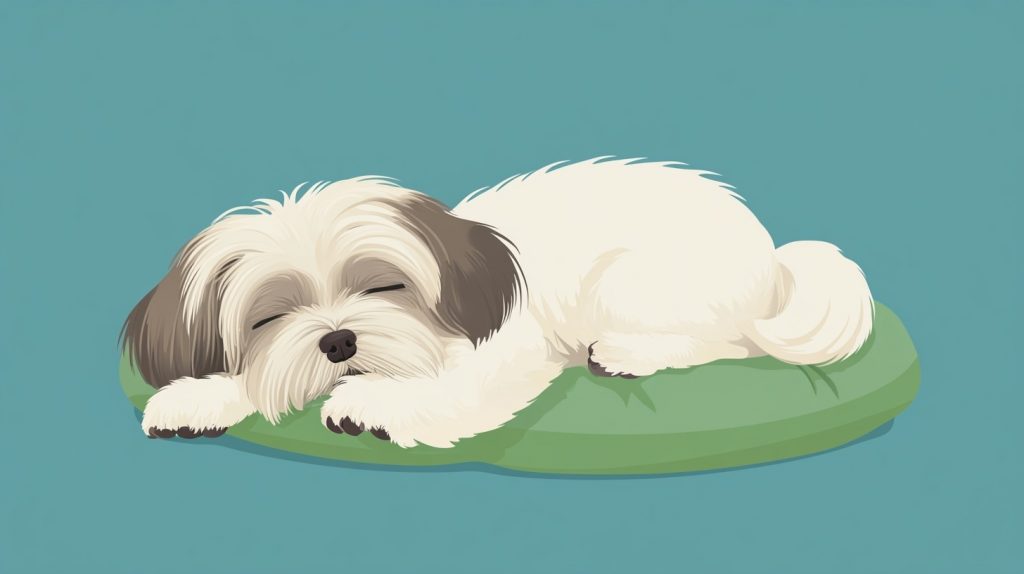
If there is one thing Lhasa Apsos are world-class at, it is sleeping. Poppy has turned napping into an Olympic sport. She can fall asleep anywhere, in any position, at any time of day, and she does it with the commitment of a dog who truly believes rest is the highest form of achievement.

But when your Lhasa Apso sleeps 14 hours a day and you are starting to wonder whether they are okay, it helps to know what is actually normal for the breed.
How much sleep does a Lhasa Apso need?
Adult Lhasa Apsos typically sleep between 12 and 14 hours per day. That includes overnight sleep plus daytime naps. It sounds like a lot, but it is completely normal for the breed and for most companion dogs of a similar size.
Puppies and senior Lhasas need even more. A Lhasa Apso puppy under six months might sleep 18 to 20 hours a day, which feels excessive until you realise that growing a luxurious coat and developing peak stubbornness requires a lot of energy. Older Lhasas (10+) also tend to sleep more as their activity levels naturally decrease.
Why Lhasa Apsos sleep so much
Lhasa Apsos are not high-energy dogs. They enjoy their daily walks and playtime, but between those bursts of activity, they are perfectly happy to curl up and doze. They were bred as companion and sentinel dogs, not working dogs. Their job was to sit, watch, alert, and then go back to sitting. Sleeping fits neatly into that lifestyle.
They are also remarkably good at conserving energy. A Lhasa can go from completely unconscious to fully alert in about half a second if they hear something interesting, like a biscuit tin opening or a suspicious noise at the front door. It is not laziness. It is tactical resting.
Common Lhasa Apso sleeping positions
Part of the joy of owning a Lhasa is watching the bizarre positions they choose to sleep in. Here are a few you will probably recognise.
The loaf. Tucked up with all four legs underneath, looking like a small fluffy bread roll. This is the “I am resting but still on duty” position.
The full sprawl. Flat on their side with legs stretched out. This means your Lhasa is deeply relaxed and feels completely safe. Poppy does this one on the sofa and somehow takes up more space than a dog three times her size.
The belly up. On their back with legs in the air. This is peak trust and comfort. If your Lhasa sleeps like this, they feel utterly secure in your home.
The burrow. Under a blanket, under a cushion, wedged behind a pillow. Lhasas love to nest. Given half a chance, they will rearrange your entire sofa to create the perfect sleeping den.
Choosing the right bed for your Lhasa Apso
Given how much time your Lhasa spends sleeping, investing in a decent bed is worth it. Look for something with raised sides or a bolster edge, because Lhasas love to rest their head on something. Memory foam bases are brilliant for older dogs with joint stiffness.
Size-wise, a medium dog bed usually works well. Lhasas like to stretch out but also like to feel enclosed, so a bed that is too large can feel exposed. A round or oval bed with a bolster rim hits the sweet spot for most Lhasas.
Browse bolster dog beds on Amazon
Lhasa Apso sleep by age
How much your Lhasa sleeps changes significantly as they age. A young puppy between 8 and 16 weeks will sleep up to 20 hours a day, waking mainly for meals, toilet breaks, and short bursts of frantic play. This is completely normal and nothing to worry about. Their little bodies are growing fast and they need the rest.
Between six months and two years, your Lhasa will be at their most active. They will still sleep 12-14 hours, but the awake hours will be more energetic, more curious, and more likely to involve stealing socks from the laundry basket. This is the age where mental stimulation matters most to help them settle well at night.
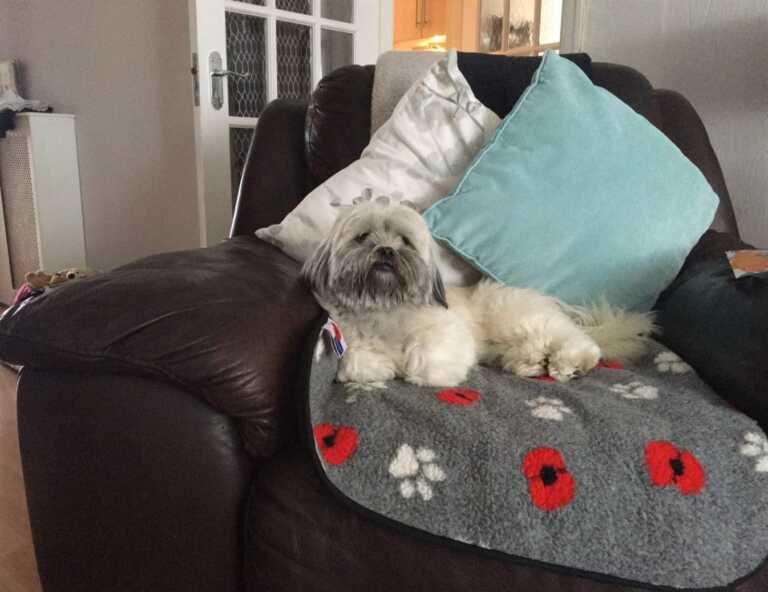
Adult Lhasas from two to eight years old settle into a predictable sleep routine. They will match your schedule surprisingly well, sleeping through the night and napping during the day when the house is quiet. Poppy has her nap schedule down to a science. Post-breakfast nap. Mid-morning nap. Post-lunch nap. Pre-dinner nap. She has basically organised her entire day around sleeping, with brief intervals of eating and barking.
Senior Lhasas over eight or nine years old gradually sleep more. You might notice them napping more frequently, sleeping more deeply, and being harder to rouse. This is a natural part of ageing, but keep an eye on the overall pattern. A gradual increase is normal. A sudden dramatic change warrants a vet visit.
When to worry about your Lhasa Apso’s sleep
Most of the time, a Lhasa sleeping a lot is just a Lhasa being a Lhasa. But there are a few red flags worth watching for.
Sudden increase in sleeping. If your normally active Lhasa suddenly starts sleeping significantly more, it could be a sign of illness, pain, or hypothyroidism (which Lhasas can be prone to). A vet check is a good idea.
Difficulty settling. If your Lhasa seems tired but cannot get comfortable, pacing, circling, or changing position constantly, they might be in pain. Joint issues, dental problems, or digestive discomfort can all disrupt sleep.
Changes in breathing during sleep. Some snoring is normal for Lhasa Apsos (they have shorter muzzles than some breeds). But loud, laboured breathing or frequent waking from sleep could indicate a respiratory issue worth investigating.
Lethargy vs sleeping. There is a difference between a dog that sleeps a lot and a dog that is lethargic. A sleeping Lhasa should perk up when something interesting happens, like dinner time or the sound of their lead. A lethargic dog shows no interest in things they normally love. That is a vet visit.
Helping your Lhasa Apso sleep better
Most Lhasas do not need help sleeping. They are naturals. But if your dog is restless at night or struggling to settle, a few things can help. A consistent bedtime routine, a comfortable bed in a quiet spot, and making sure they have had enough exercise and mental stimulation during the day all contribute to better sleep.
Avoid feeding too close to bedtime and make sure they have had a final toilet trip before you turn in for the night. Puzzle toys during the day can tire out their brain as well as their body, leading to deeper, more restful sleep.
What is your Lhasa’s favourite sleeping position? And where do they insist on sleeping? We bet at least half of you are going to say “on our bed.” Drop your answers in the comments.
Important information
Information provided by LhasaLife should not be taken as professional veterinary advice or clinical advice. It is important to consult a licensed veterinarian for any health concerns or issues with your pet. The content of the article Lhasa Apso sleeping habits: how much sleep do they actually need? should not be used as a substitute for veterinary care, or treatment advice for you or your pet, and any reliance on this information is solely at your own risk.
This article may contain affiliate links, meaning we may earn a small commission at no extra cost to you if you purchase through these links. Affiliate links do not necessarily imply an endorsement of the product by LhasaLife. However, we only share products we believe could be helpful to you and your beloved Lhasa Apso. Your support helps us keep the website running and full of useful content.




Comments