


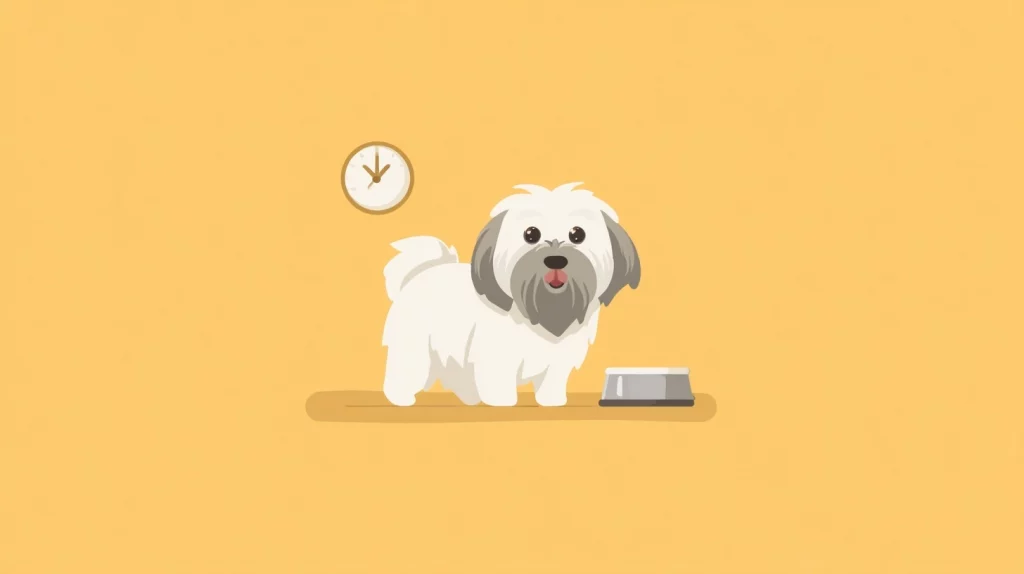
Dogs are creatures of habit. They thrive on predictability in a way that would make most humans feel trapped. While we crave spontaneity and variety, your dog genuinely wants to know what’s happening next. Feeding at the same time, walking the same route, sleeping in the same spot. It’s not boring to them. It’s reassuring. And the science backs this up.

Research in animal behaviour consistently shows that dogs with predictable daily routines display fewer anxiety-related behaviours, are easier to train, and are generally calmer. The reason is straightforward: when a dog knows what’s coming, they don’t need to be on edge wondering about it. That mental energy gets redirected into being relaxed, playful, and present. It’s the canine equivalent of having your week planned out instead of winging it.
What routine does for anxious dogs
For dogs prone to anxiety, and breeds like the Lhasa Apso that can struggle with separation anxiety, routine is therapeutic. An anxious dog that knows their owner leaves at 8am and returns at 5pm can settle down during that time because the pattern is familiar and predictable. An anxious dog whose owner leaves at random times for random durations is in a constant state of uncertainty.
Routine doesn’t eliminate anxiety, but it removes one of its biggest fuel sources: unpredictability. When your dog can anticipate what happens next, their stress response stays dialled down. The cortisol spikes that come with “what’s happening now?” are replaced with calm anticipation of “I know this bit. Breakfast is next.”
Building a morning routine
Your dog’s morning sets the tone for the whole day. A good morning routine for most dogs looks something like: wake up, straight outside for a toilet break, breakfast, a walk or play session, then settle time. The specifics don’t matter as much as the order staying consistent.
Feed breakfast at roughly the same time each day, within a 30-minute window. This keeps your dog’s digestion regular, makes housebreaking easier (because you can predict when they’ll need to go), and prevents the increasingly dramatic “I’m starving” performances that start approximately four seconds after their usual mealtime has passed. Poppy has this down to an art. If breakfast is two minutes late, you’d think she hadn’t eaten in weeks.
A morning walk or garden play session burns off the overnight energy buildup and gives your dog the physical and mental stimulation they need to settle for the rest of the morning. Even 15 to 20 minutes is enough for most small breeds. If you work from home, this is also a good time for a short training session. Five minutes of practising commands or tricks before you sit down at your desk can make a noticeable difference to your dog’s behaviour for the rest of the morning.
The midday check-in
If you’re home during the day, a midday toilet break and a brief activity is ideal. This doesn’t need to be a full walk. A garden sniff, a quick game, or a puzzle toy with some of their daily food allowance keeps things ticking over without disrupting your schedule.
If you’re out at work, this is where arrangements matter. Dogs shouldn’t be left alone for more than four to six hours (less for puppies). A dog walker, a lunch-time visit from a friend or family member, or a doggy daycare arrangement covers the midday gap and breaks up what would otherwise be a very long stretch of nothing for your dog.
Evening routine
Evening is usually the main walk and quality time. A longer walk, a training session, or simply hanging out together while you watch TV all count. Dogs need to wind down in the evening just like we do, and a period of calm after the walk helps them transition into rest mode.
Evening meals should be fed at a consistent time, ideally at least two hours before bedtime to give them time to digest and have a final toilet trip. Last toilet break of the night should be the very last thing before bedtime, every night, same time.
Bedtime
Where your dog sleeps and when they go to bed should be as consistent as everything else. Dogs that have a defined sleeping spot and a predictable bedtime settle faster and sleep better. Whether that’s a crate, a dog bed in the bedroom, or (let’s be honest) your actual bed, keep it the same.
A simple bedtime ritual helps signal that the day is over. Final toilet trip, a small dental chew, into their bed, lights down. Within days, your dog will start anticipating the routine and begin settling themselves as bedtime approaches. It’s one of the most satisfying things to watch: a dog that calmly takes themselves off to bed because they know the schedule.
What about weekends and days off?
Here’s where owners often struggle. You’ve been consistent all week, then Saturday morning arrives and you want a lie-in. Your dog does not understand weekends. They understand “we get up at 7am” because that’s what happens every day. Deviating by an hour isn’t the end of the world, but don’t be surprised when your dog wakes you at the usual time regardless.
A bit of flexibility is fine. Dogs can handle some variation. But the core structure, mealtimes, walks, and sleep times, should stay roughly consistent even on your days off. If you’re going out for the day, try to stick to the morning routine before you go. Your dog will be calmer in your absence if the day started normally.
Routine during life changes
Moving house, bringing home a new baby, changing jobs, or even having builders in can throw your dog’s routine into chaos. During major life changes, try to keep as many elements of the routine intact as possible. Same feeding times, same walk schedule, same bedtime. Everything around them might be changing, but those anchoring points provide stability.
If changes to the routine are unavoidable, transition gradually rather than all at once. Shifting a feeding time by 15 minutes per day over a week is far less disruptive than suddenly feeding two hours later because your new commute is longer.
Signs your dog’s routine isn’t working
If your dog is restless, destructive, barking excessively, having toilet accidents, or struggling to settle, their routine may need adjusting. They might need more exercise, more mental stimulation, or more frequent toilet breaks. They might be over-stimulated and need more structured downtime. Observation is your best tool here. Track what happens and when, and adjust accordingly.
A well-structured routine isn’t rigid or joyless. It’s a framework that gives your dog security and predictability, while still leaving room for spontaneous adventures, new experiences, and the occasional impromptu game of chase around the garden. Get the routine right, and everything else gets easier.
What does your dog’s daily routine look like? Have you noticed a difference since establishing one? Share your schedule in the comments!
Important information
Information provided by LhasaLife should not be taken as professional veterinary advice or clinical advice. It is important to consult a licensed veterinarian for any health concerns or issues with your pet. The content of the article Why your dog needs a daily routine (and how to build one) should not be used as a substitute for veterinary care, or treatment advice for you or your pet, and any reliance on this information is solely at your own risk.
This article may contain affiliate links, meaning we may earn a small commission at no extra cost to you if you purchase through these links. Affiliate links do not necessarily imply an endorsement of the product by LhasaLife. However, we only share products we believe could be helpful to you and your beloved Lhasa Apso. Your support helps us keep the website running and full of useful content.

Comments