


You’ve got your garden. Your Lhasa has claimed your sofa. Now comes the tricky bit: making sure your outdoor space doesn’t accidentally become a minefield of danger wrapped in petals and bark. Lhasas might be small, but they’re intrepid explorers with a stubborn streak that would impress a mule. A dog-friendly garden isn’t just about avoiding the obvious perils; it’s about understanding what makes your particular velvet dustmop tick.
The plants that want to harm your Lhasa
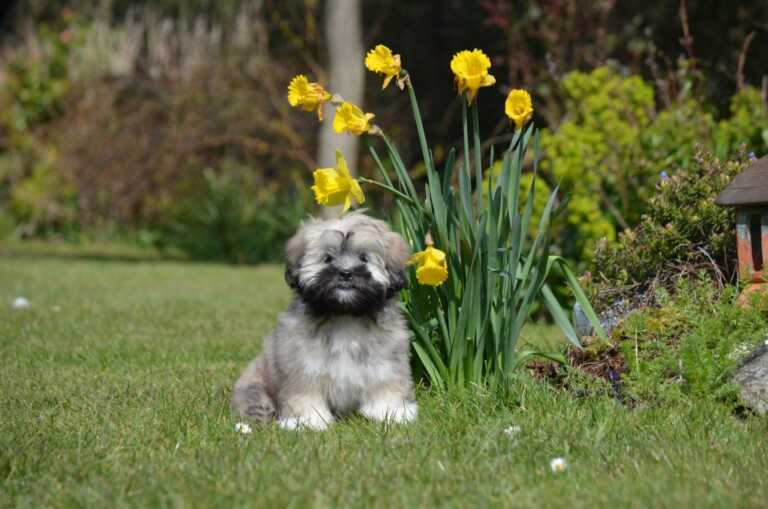
Let’s be honest, some plants are genuinely toxic to dogs, and lilies top the hit list. These look innocent enough lounging in a vase, but they’re absolute poison to our furry friends, particularly the lilies’ pollen. Foxglove, with its elegant purple spikes, is equally treacherous. Laburnum (the golden chain tree) and daffodils also belong firmly on the “don’t even think about it” list. Sago palm, yew, and hemlock round out the rogues’ gallery.
If you’re not sure whether something is safe, a quick Google of “toxic plants dogs” or a call to your vet beats discovering the hard way that your prized hydrangea gave Poppy a tummy upset. Better yet, stick with dog-safe alternatives: sunflowers, marigolds, and roses are all perfectly Lhasa-friendly.

Fencing, gates, and the great escape artist
If you think your Lhasa is too small to be an escape artist, you haven’t met enough Lhasas. These dogs have an independent streak the width of Tibet and will absolutely leg it after a butterfly if they get the chance. Your fencing needs to be at least 1.2 metres tall, and crucially, it needs to go right down to the ground. A determined Lhasa will dig under gaps faster than you can say “get back here.”
Check gates regularly for gaps, and make sure any gaps are actually secure. Spend fifteen minutes checking before you spend fifteen minutes fishing your dog out of next door’s rabbit hutch. Microchipping is non-negotiable as a backup. For extra peace of mind, learn more about microchipping your Lhasa.
Shade, water, and the overheating problem
Lhasas love the sun. Lhasas also love to overheat because their coats are designed for high-altitude Tibetan monasteries, not the British summer. We’re talking heavy double coats that trap heat like a thermal duvet. Your garden needs proper shade, whether that’s a tree, a gazebo, or a dedicated dog shelter. A sunny garden with no escape route is a recipe for heatstroke.
Fresh water is non-negotiable. Leave a sturdy bowl in the shade (not one that tips over at the slightest breeze), and refill it regularly. If your Lhasa is outside for more than an hour in summer, bring them in. There’s no prize for proving you’re a martyr to the elements. Understanding your Lhasa’s exercise needs in different seasons is crucial here.
Water hazards and digging zones
A garden pond looks lovely. A pond with a Lhasa-sized dog is a slightly different proposition. Ponds need proper safety measures if they’re not going to become a muddy bath where your dog emerges looking like they’ve been dipped in a swamp. Either fence off the pond or make sure the edges are shallow and manageable. Chemicals used to keep ponds clean can be toxic, so check what’s actually in the water before Poppy takes a dip.
The digging thing? Accept it. Some Lhasas are diggers, some aren’t, but the ones who are will turn your garden into the Somme without a designated zone. Create a shallow digging pit filled with sand, hide treats in it, and redirect your dog there. It’s not surrender; it’s tactical compromise.
Garden chemicals and the deadly shed
Pesticides, slug pellets, fertilisers, and weedkillers are all wonderfully toxic to Lhasas. They’re also often made to smell vaguely appealing, which makes them irresistible to curious dogs. Keep everything locked up in a shed your dog can’t access, or better yet, use dog-safe alternatives. There are plenty of organic pest control methods that won’t poison your furry gardener.
Compost heaps are another culprit. Rotting food can ferment and produce mycotoxins (basically fungal poisons), which is genuinely hazardous. Lhasas are small but tenacious, and they’ll absolutely investigate a promising heap. Either keep it completely sealed and secure, or keep it somewhere your dog can’t reach.
Building a Lhasa-friendly routine
Your garden should be a place where your Lhasa can potter about safely whilst you read a book or pretend to do gardening. That means regular inspections for new hazards, holes, loose fencing, and debris. Check that your dog has shade and water before you let them out. Keep an eye on them, especially in hot weather.
The brilliant thing about a properly set up garden is that you can relax. Your Lhasa gets their exercise needs met without you having to walk miles, and you get a few moments of peace. Well, relative peace. Lhasas are noisy. But that’s a temperament issue, not a garden design issue. Understanding Lhasa temperament helps you predict what they’ll get up to out there.
Easter and seasonal considerations
Spring brings some specific dangers. Easter chocolate, Easter lilies, and spring plants can all pose problems. Your Lhasa’s guide to surviving Easter goes into detail, but the short version is: be extra vigilant in spring.
As a first-time Lhasa owner, you might think a garden is an afterthought. It’s not. It’s the difference between a content dog and a bored dog, between a safe Lhasa and one who’s found seventeen ways to injure themselves. Get it right, and you’ve basically created a tiny happy-bubble of controlled chaos. That’s the dream, really.
Important information
Information provided by LhasaLife should not be taken as professional veterinary advice or clinical advice. It is important to consult a licensed veterinarian for any health concerns or issues with your pet. The content of the article Creating a Lhasa Apso-friendly garden should not be used as a substitute for veterinary care, or treatment advice for you or your pet, and any reliance on this information is solely at your own risk.
This article may contain affiliate links, meaning we may earn a small commission at no extra cost to you if you purchase through these links. Affiliate links do not necessarily imply an endorsement of the product by LhasaLife. However, we only share products we believe could be helpful to you and your beloved Lhasa Apso. Your support helps us keep the website running and full of useful content.
Comments