

How much exercise does a Lhasa Apso need?
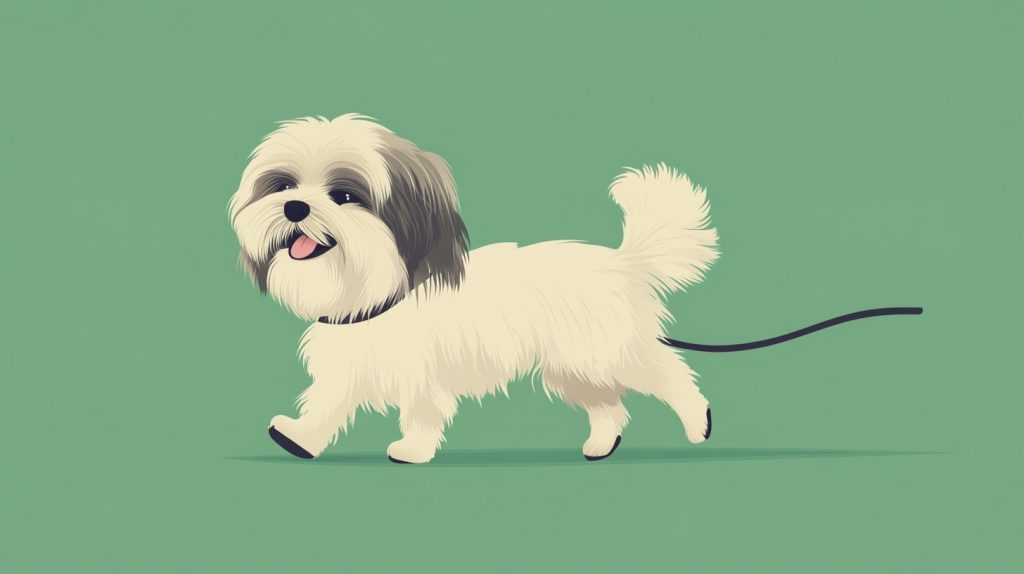
Here’s the straightforward answer: a healthy adult Lhasa Apso needs about 30 minutes of exercise daily. That’s walking, playtime, or a mix of both. They’re not marathon runners, but they’re not couch potatoes either. They’ve got sturdy little legs built for exploring, and they’ll use them, especially if they catch a scent that interests them.
The beauty of the Lhasa is flexibility. Those 30 minutes don’t need to happen all at once. A 15-minute walk in the morning and another in the afternoon suits them just fine. Some days you’ll do a longer ramble; others, a quick stroll round the block with a play session in the garden. They adapt to your lifestyle, which is why they’ve thrived as beloved companions for centuries.
Exercise by age: puppies, adults and seniors
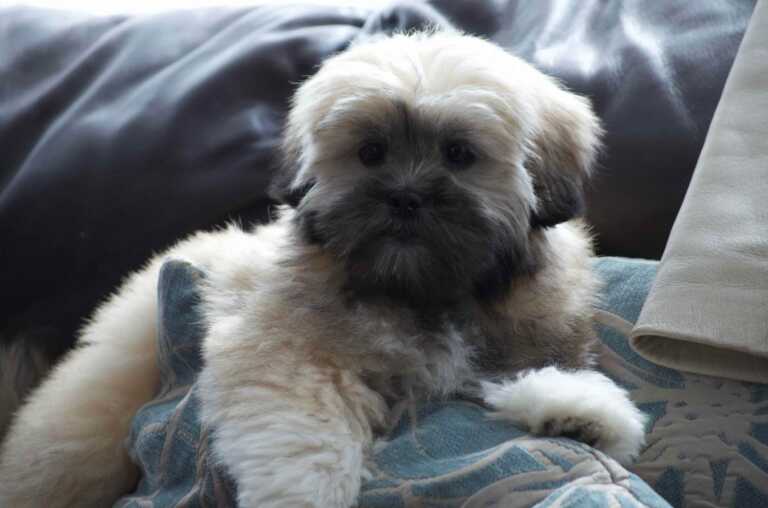
Lhasa Apso puppies (8 weeks to 12 months)
Puppies have endless energy but delicate growing joints. That’s the key tension with youngsters. You want to tire them out, but you can’t overdo it.
A good rule: five minutes of exercise per month of age, twice a day. So a four-month-old pup gets about 20 minutes of activity in the morning and 20 in the evening. Short, playful sessions work brilliantly: fetch, tug games, exploring the garden, socialising with other dogs. Their attention span’s rubbish anyway, so intensity beats duration.
Avoid repetitive jumping or long lead walks until they’re at least 18 months old. Their growth plates aren’t fully closed, and pounding pavement stresses developing bones. Poppy was a madcap puppy who’d have happily sprinted for hours, but we kept her sessions short and let her set the pace on walks. It paid off. She’s been solid and healthy ever since.
Adult Lhasa Apsos (1 to 8 years)
This is their prime. An adult Lhasa thrives on that 30-minute daily routine we mentioned. Most will have settled into their personality by now. Some love long walks, others prefer pottering about with frequent sniff breaks. You’ll learn what your dog enjoys and what they actually need, which often differ.
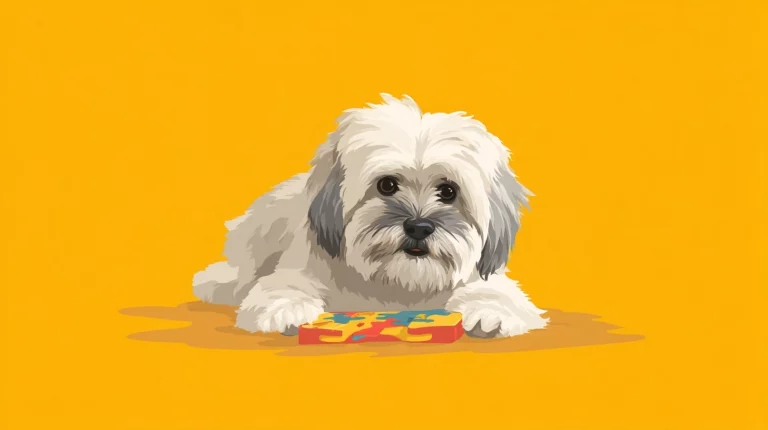
Mental stimulation is just as important as physical exercise at this life stage. A tired mind is often more valuable than tired paws. Puzzle toys, training games, scent work. These challenge their clever little brains. Poppy’s always been a thinker, and we’ve found that a 20-minute walk combined with 10 minutes of problem-solving leaves her more settled than a solo 30-minute stroll.
Senior Lhasa Apsos (8+ years)
Older Lhasas need exercise, but quality replaces quantity. At 10 years old, Poppy does about 20-25 minutes of gentler walking daily, usually one longer walk and a couple of shorter outings. She moves slower, tires more easily, and sometimes her joints remind her (and us) of her age.
Don’t mistake reduced pace for laziness. Many seniors genuinely enjoy shorter, more frequent outings. Watch your dog’s body language. If they’re limping, reluctant to walk, or seem painful afterwards, scale it back or talk to your vet about joint support. Softer walking surfaces (grass, woodland paths) are kindest on ageing bones.
Mental stimulation matters as much as physical exercise
Here’s what new Lhasa owners often miss: these dogs are intelligent and curious. A Lhasa that’s only walked isn’t truly exercised.
Hide treats around the house or garden and let them use their nose to find them. Teach new tricks: not just sit and stay, but spin, back up, or ring a bell. Play interactive games like hide-and-seek. Set up obstacle courses in the garden (cushions, low jumps, weaving between cones). Rotate their toys so novelty stays high.
A mentally stimulated Lhasa is calmer, better-behaved, and more fulfilled. They’re less likely to develop destructive behaviours or nuisance barking. Poppy gets a dedicated “brain work” session most days (usually nosework games or training), and the difference in her contentment is noticeable. She settles faster, sleeps better, and seems genuinely satisfied.
The risks of over-exercising your Lhasa Apso
Small dogs aren’t invincible, and this is where we see owners make mistakes with Lhasas. Because they’re sturdy little things, people sometimes treat them like working dogs. They’re not.
Over-exercise in puppies causes joint damage, dysplasia, and long-term lameness. In adults, it can trigger ligament injuries, arthritis (especially in the knees), and heat exhaustion. Exhaustion doesn’t always look dramatic. Sometimes it’s just a dog that’s sore the next day, or starts limping, or becomes anxious.
Poppy, being a keen walker, could happily tag along on five-mile rambles. We don’t do that. We’ve stayed disciplined about her limits, even when she’d happily push further. That restraint has kept her sound into her senior years.
Watch for excessive panting, reluctance to continue, lameness, or unusual stiffness the next day. These are signs you’ve overdone it. If it becomes a pattern, dial it back and consult your vet.
Exercise in hot and cold weather
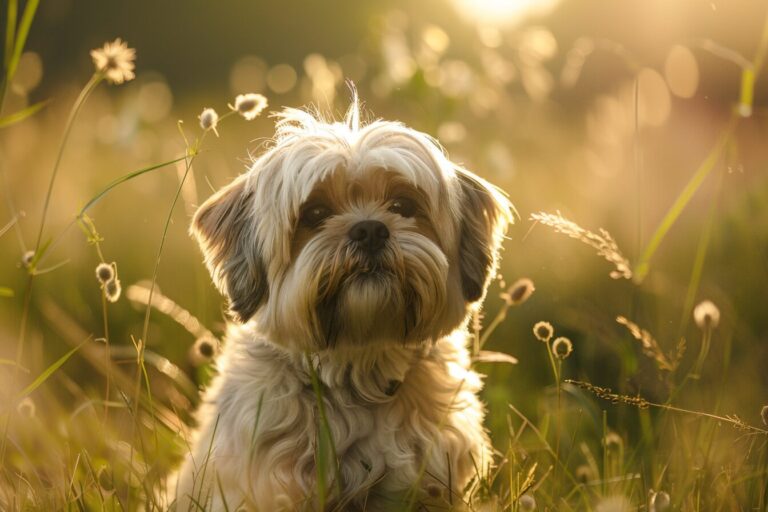
British summers bring occasional warm spells, and that’s when Lhasas struggle. Their long coats weren’t designed for heat, and they overheat more readily than shorter-coated breeds.
During warm weather, exercise early in the morning or later in the evening when it’s cooler. Keep pace slow. Provide lots of water. Watch carefully for panting, drooling, or lethargy. These are heat stress signs, and they’re serious. Never leave your Lhasa in a hot garden or parked car, obviously.
Winter’s easier for them. They love cooler temperatures and their coat provides natural insulation. Muddy walks are part of the job, though, so bath days become frequent. Poppy’s happiest in autumn and winter when she can move freely without overheating.
If your area gets genuinely cold (below freezing regularly), consider a snug coat for walks, especially for older dogs with slower circulation. Snow and ice are manageable as long as you check their paws afterwards for stuck ice balls and salt irritation.
Indoor exercise and enrichment ideas
Sometimes the weather’s grim or you’re poorly or life just gets in the way. That’s when indoor options keep your Lhasa’s fitness ticking over.
Try stair climbing. Teaching them to navigate stairs safely uses different muscle groups than walking. Set up an indoor obstacle course using cushions and furniture. Play fetch down a hallway. Hide treats throughout the house and make a game of finding them. Teach new tricks. Training sessions are surprisingly tiring mentally. Use a treadmill designed for small dogs if you’re seriously committed (though most Lhasas find them boring).
Rainy weekends aren’t excuses to skip exercise entirely. A good indoor enrichment session plus a couple of short walks keeps their fitness reasonable. Poppy’s never keen on rainy days, but half an hour of indoor games and a quick trip round the block keeps her settled.
Signs your Lhasa Apso isn’t getting enough exercise
A Lhasa that’s under-exercised becomes a problem dog. Not because they’re badly behaved, but because they’ve got restless energy with nowhere to go.
Watch for: excessive barking (especially at seemingly nothing), destructive chewing, jumping at people, nipping or mouthing, pacing, hyperactivity indoors, or general anxiety. Some develop obsessive behaviours like chasing their tail repeatedly. Others become aggressive towards toys, people, or other dogs, not from malice, but from pent-up tension.
A bored Lhasa is also more likely to eat things they shouldn’t, dig holes in the garden, or escape-attempt. Their minds start working against boredom, which usually means trouble.
If your Lhasa’s suddenly acting out, the first thing to check is exercise level. Many behavioural problems vanish once they’re getting proper physical and mental activity.
Poppy’s exercise routine
At 10 years old, Poppy’s settled into a comfortable rhythm. She does one longer walk most mornings (30-40 minutes, depending on her mood and the weather), usually on quiet country lanes where she can sniff freely. In the afternoon, if the weather’s nice, she’ll potter round the garden or we’ll do a short 10-minute walk round the village.
She’s got preferences. She loves wooded paths and will happily spend 20 minutes on a single patch of undergrowth, using her nose. Open fields bore her. She’s also lost patience with fetch as she’s aged; it’s more her style to mooch alongside you at her own pace.
A few times weekly we’ll do a dedicated enrichment session: hiding treats round the house, short training work (she still loves learning), or sniff games with puzzle toys. These sessions keep her mind sharp and seem to matter more to her now than raw distance walked.
The result? She’s fit, healthy, maintains a good weight, sleeps deeply, and has none of the anxiety or destructive behaviours that under-stimulated dogs develop. She’s also clearly content, which is the whole point.
FAQ
Q: Can I exercise my Lhasa Apso in a dog park? A: Yes, but supervise carefully. Lhasas can be territorial with other dogs, especially if they’re anxious. Off-lead play should only happen if you’re confident they’ll return and get along with the other dogs there. Some Lhasas are social butterflies; others prefer their own company. Know your dog’s temperament first.
Q: What’s the best time of day to exercise a Lhasa Apso? A: Whatever fits your schedule consistently. Morning walks help settle them for the day; evening walks help them sleep. Some owners split it, with morning and evening outings. Consistency matters more than timing. Poppy’s always done better with morning exercise, but that’s her preference, not a rule.
Q: Is swimming good for Lhasa Apsos? A: Great question. Many Lhasas aren’t natural swimmers. Their long coats get heavy when wet, and they tire quickly. Some enjoy paddling in shallow water or playing in garden sprinklers. Formal swimming lessons for fitness aren’t ideal for the breed. If you want swimming, introduce them young and keep it fun and shallow.
Q: How do I know if my Lhasa Apso is getting old and needs less exercise? A: Watch their behaviour over weeks, not days. Genuine ageing looks like slower movement, reluctance to jump or climb stairs, needing longer recovery time after walks, or limping. One slow day means nothing; consistent changes mean it’s time to adjust. Talk to your vet if you’re unsure. Some senior Lhasas surprise you and stay remarkably active.
Exercise isn’t something you do to a Lhasa. It’s something you do with them. It’s a conversation between what they’re capable of and what they genuinely need. Get that balance right, mix physical and mental activity, and you’ll have a settled, happy, healthy companion. Poppy’s proof that sensible exercise habits pay off for years.
Now, get out there and give your Lhasa a good walk. They’re ready.
Important information
Information provided by LhasaLife should not be taken as professional veterinary advice or clinical advice. It is important to consult a licensed veterinarian for any health concerns or issues with your pet. The content of the article Lhasa Apso Exercise Needs: The Complete Guide by Age should not be used as a substitute for veterinary care, or treatment advice for you or your pet, and any reliance on this information is solely at your own risk.
This article may contain affiliate links, meaning we may earn a small commission at no extra cost to you if you purchase through these links. Affiliate links do not necessarily imply an endorsement of the product by LhasaLife. However, we only share products we believe could be helpful to you and your beloved Lhasa Apso. Your support helps us keep the website running and full of useful content.


Comments