

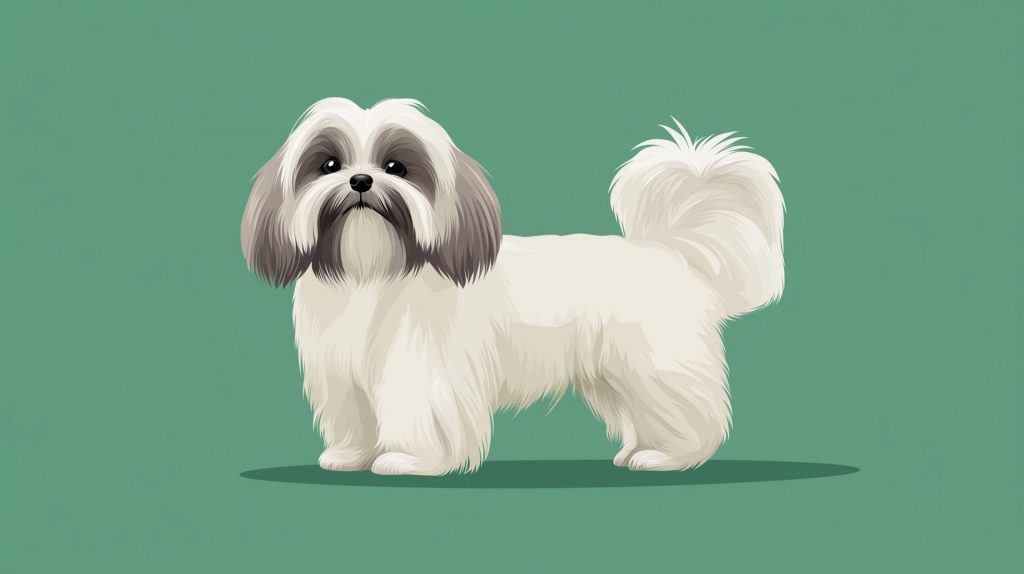
If you’ve ever watched a Lhasa Apso trot past you with their coat flowing like a golden cape, you’ve probably wondered: “How on earth do they keep that looking so magnificent?” The answer is simple. It’s not magic. It’s the right brush.
We’ve tested countless grooming tools over the years, and we’ve learned exactly what works on a Lhasa Apso’s specific coat type. Their double coat, with its soft, fluffy undercoat and longer, slightly coarser outer hairs, requires a very different approach from a Labrador or a Poodle. Get the right brush, and you’ll spend less time detangling. Get the wrong one, and you’ll be wrestling with mats whilst Poppy watches from the sofa with a smug expression.
This guide walks through the best brushes for Lhasa Apsos, what makes each one special, and why we’d reach for each one in different situations. By the end, you’ll know exactly what to buy and why.

Why your Lhasa’s coat is harder to brush than you think
Let’s be honest: the Lhasa Apso coat is gorgeous, but it’s also a commitment. These little dogs were originally bred in Tibet to live in harsh mountain climates. That coat isn’t decoration. It’s a working double coat, designed to protect them from extreme temperatures.
What this means for us is that the undercoat is dense. Really dense. It sheds constantly, and underneath all that flowing topcoat is a woolly layer that loves to tangle. When the two layers start matting together, you’ve got a real problem. A brush that works fine on a single-coated breed will sail over the surface of a Lhasa’s coat and miss the dense undercoat entirely.
That’s why the right brush tool matters so much. You need something with the power to reach down into both layers without damaging the longer, silkier guard hairs. You need a brush that won’t pull or break the coat. And honestly, you need a brush that won’t make you want to throw in the towel after five minutes.
The Chris Christensen Big G Slicker Brush: the gold standard
If we’re being serious about Lhasa Apso grooming, we have to start here. The Chris Christensen Big G Slicker Brush is used by professional show groomers worldwide, and there’s a reason for that. It’s genuinely brilliant at what it does.
The Big G has a large, flat surface with very fine wires packed densely together. When you’re brushing a Lhasa’s coat with one of these, you can feel the difference immediately. It glides through without catching or tugging, but the fine wires still reach deep into that undercoat to grab the loose, matted fur that’s hiding underneath.
The handle is ergonomically designed (your hand won’t cramp after a solid grooming session), and the brush itself is sturdy enough to last for years. You’ll pay more for one of these than you would for a bargain-basement brush, but it’s worth every penny because you’ll actually enjoy the grooming process instead of dreading it.
We use a slicker brush like this as our first pass when grooming a Lhasa. It’s the workhorse of your grooming kit.
Where to buy: Chris Christensen Big G on Amazon UK
The Pecute Self-Cleaning Slicker Brush: brilliant value
Here’s where we’ll catch some stick from the professionals: the Pecute Self-Cleaning Slicker Brush is genuinely excellent, and it costs a fraction of the Chris Christensen. With thousands of reviews on Amazon UK and a solid 4.4-star rating, it’s clearly doing something right.
The secret is that self-cleaning button. After you’ve brushed a section of your Lhasa’s coat, you press the button and the wires retract slightly, ejecting all the loose fur you’ve collected. It’s a game-changer. Instead of spending five minutes manually picking out undercoat from the brush, you press a button and watch it all fall away. It saves you time and makes the whole process feel less tedious.
The brush itself is gentle on the coat and does a lovely job of reaching into that double coat without causing breakage. We’ve never had an issue with it catching or snagging. If you’re on a tighter budget, this is the brush we’d recommend. It won’t let you down.
Where to buy: Pecute Self-Cleaning Slicker Brush on Amazon UK
The Tangle Teezer Pet Detangling Brush: for sensitive skin and stubborn tangles
The Tangle Teezer started as a revolutionary tool for human hair, and the pet version is just as clever. It’s a UK brand (always a plus), and it approaches coat care from a completely different angle than a traditional slicker brush.
Rather than fine wires, the Tangle Teezer uses short, flexible teeth that are brilliant at gently working through existing tangles and mats without yanking at the coat. This makes it particularly good for Lhasas with sensitive skin or for dogs who’ve already developed a few stubborn mats that you’re trying to tease apart.
It’s not quite as efficient at deep undercoat removal as a proper slicker brush, so we wouldn’t use this as your only brush. But as part of a grooming routine, especially for finishing and for working out problem areas, it’s wonderful. Many owners also find that their Lhasas actively enjoy being brushed with a Tangle Teezer because it doesn’t feel uncomfortable.
Where to buy: Tangle Teezer Pet Detangling Brush on Amazon UK
The metal comb: your finishing touch and mat detector
Every Lhasa Apso owner should own a quality metal comb. We know it sounds old-fashioned, but hear us out. After you’ve done all your slicker brush work, a fine-toothed metal comb serves two critical purposes.
First, it’s a quality check. Run the comb through your Lhasa’s coat. If you hit resistance, there’s likely a mat or tangled section you’ve missed. The comb catches things that a brush might glide over. Second, it’s brilliant for finishing the coat. It smooths everything down, separates the longer guard hairs, and gives you that polished, show-dog look.
Metal combs come in various grades. For a Lhasa, you want a fine-toothed comb (sometimes called a Greyhound comb) with teeth spaced around 1/12 of an inch apart. Stainless steel won’t rust, and a comb with a handle that actually fits your hand will save you from hand cramps.
This tool costs very little, but it’s invaluable. Think of it as your quality assurance department.
Where to buy: Metal combs on Amazon UK
Professional-grade options: going beyond the basics
If you’re serious about grooming and you want access to the full range of professional slicker brushes and combs, Amazon stocks a huge range of professional grooming tools that you won’t find in your local pet shop
The downside is that you need to know what you’re looking for, and some of their options are genuinely overkill for a home groomer. But if you want to experiment with different brush styles or you’ve decided you’re fully committed to home grooming, they’re brilliant.
Where to buy: Professional slicker brushes on Amazon UK
How to actually use these brushes (the technique matters)
Having the right brush is half the battle. The other half is using it correctly. Most people brush their Lhasa’s coat wrongly, which means even a brilliant brush won’t perform well.
Start with your coat damp, not soaking wet. Dry or slightly damp coat brushes best. Work in sections, starting at the head and working your way down the body. Brush with the hair growth, not against it. Take your time. Rushing through a grooming session is how mats happen.
When you’re using a slicker brush, use gentle, smooth strokes. You’re not trying to sand the coat off. Let the brush do the work. If you hit resistance, you’ve found a tangle. Stop and work it out gently with your Tangle Teezer or a comb before moving on.
Pay special attention to the areas where mats love to hide: behind the ears, under the armpits, between the hind legs, and around the sanitary area. These spots need extra care and extra passes with your brush.
We recommend grooming your Lhasa at least twice a week, ideally three times if you’re aiming for a pristine look. Yes, it’s a commitment, but it’s far less painful than trying to deal with a severely matted coat. For more detailed guidance, check out our article on professional grooming tips for Lhasa Apsos.
Preventing mats before they happen
The best time to deal with mats is before they exist. That’s why brushing regularly matters so much. But there are other things you can do too.
A good conditioning spray or lightweight coat oil can help reduce matting by keeping the coat slightly more hydrated. Some owners swear by them. Just be careful not to use anything too heavy, as that can make the undercoat more prone to tangling, not less.
You’ll also want to learn to spot the early signs of matting. If you notice small knots starting to form, deal with them immediately. A five-minute untangling session now beats a thirty-minute battle with a serious mat later.
For comprehensive advice on mat prevention, our full guide on how to prevent matting in your Lhasa Apso’s luxurious coat covers everything you need to know.
Different grooming styles, different brushing needs
Depending on how you’re grooming your Lhasa, you might find you need slightly different tools. If you keep your dog in full coat (that gorgeous long look), you’ll be brushing frequently and you’ll want all the tools we’ve mentioned. If you prefer a shorter, puppy cut style, you’ll still benefit from regular brushing, but you might find you don’t need the metal comb as much.
For a detailed look at different Lhasa grooming styles and what each requires, check out our article on Lhasa Apso grooming styles.
The brush you’ll actually use is the best one
Here’s the honest truth: the best brush for your Lhasa Apso is the one you’ll actually pick up and use regularly. If you hate the feel of a brush in your hand, or if you find the grooming process miserable, you won’t do it consistently, no matter how brilliant the brush is.
That’s why we’ve included options at different price points. The Chris Christensen is genuinely wonderful, but if it’s going to sit in a cupboard because you resent spending that much money, the Pecute will do an excellent job at half the price. If you find the whole process overwhelming, start with a Tangle Teezer and a metal comb and work up from there.
Grooming your Lhasa should be a moment you enjoy together. Your dog gets a spa day, you get some quality time, and you both end up happier. The right brush makes that possible.
Have you got a favourite brush for your Lhasa? Drop a comment below and let us know what’s worked for you. We’d love to hear which tools have made the biggest difference for your dog’s coat.
This article contains affiliate links. If you buy through our links, we may earn a small commission at no extra cost to you, which helps keep LhasaLife running. See our affiliate disclosure for details.
Important information
Information provided by LhasaLife should not be taken as professional veterinary advice or clinical advice. It is important to consult a licensed veterinarian for any health concerns or issues with your pet. The content of the article The best brush for Lhasa Apsos: what really works on that glorious coat should not be used as a substitute for veterinary care, or treatment advice for you or your pet, and any reliance on this information is solely at your own risk.
This article may contain affiliate links, meaning we may earn a small commission at no extra cost to you if you purchase through these links. Affiliate links do not necessarily imply an endorsement of the product by LhasaLife. However, we only share products we believe could be helpful to you and your beloved Lhasa Apso. Your support helps us keep the website running and full of useful content.

Comments